
Surprisingly, Serious Eats found its favorite organizer after testing 13 models priced from $9 to $90. This shows that the right kitchen drawer organizers can make a cluttered drawer neat and useful without costing a lot.
This guide helps you pick the best drawer organizers for your kitchen. You can choose from bamboo, plastic, metal, or modular systems like ORGA-LINE. You’ll learn how to measure, edit, and match organizers to your kitchen items.
Expect clear advice on choosing and caring for your drawer organizers. We recommend top picks like the Pipishell Bamboo Expandable Drawer Organizer. We also discuss the pros and cons of each material, like bamboo’s beauty but need for extra care, and metal and plastic’s ease of cleaning.
Key Takeaways
- Measure drawers and edit items before buying organizers.
- Choose a mix of compartment sizes and at least one long slot for spatulas and whisks.
- Bamboo offers warmth and style; plastic and metal win for easy cleaning.
- Expandable and adjustable systems work best for non-standard drawers.
- Quality organizers improve kitchen organization, workflow, and safety.
Why drawer organization matters for kitchen organization
Having an organized drawer layout makes daily tasks simpler. Serious Eats says that when utensils and tools are in their own spots, finding what you need is easy. Small things like trays and dividers make meal prep quicker and reduce daily stress.
Mental and practical benefits of organized drawers
Cluttered drawers can make you feel overwhelmed. A clean drawer helps you make decisions faster and lowers morning stress. The Spruce Eats advises getting rid of things you don’t use before buying organizers. This clears space and helps you stay focused.
How drawer organization improves kitchen workflow and safety
A well-organized layout makes moving around the kitchen easier. Grouping items by use keeps what you need close, saving time. Knife inserts and special slots protect your hands and blades, reducing the chance of accidents.
Common drawer problems: overflow, shifting items, hard-to-reach utensils
Too much stuff in drawers hides useful tools. Without compartments, forks and spoons get mixed up. Using flexible dividers and different compartments stops items from moving and makes everything easy to find.
Organizing your drawers leads to better workflow, fewer accidents, longer tool life, and less stress. Start with simple ideas and tips to enjoy lasting benefits from your drawers.
Top Drawer Organizers Every Kitchen Needs
Start with a simple plan: match organizer type to what you store. Good drawer choices turn clutter into clear, fast access. The right pieces create reliable kitchen storage solutions and simplify daily routines.
Overview of essential organizer types to cover all drawer needs
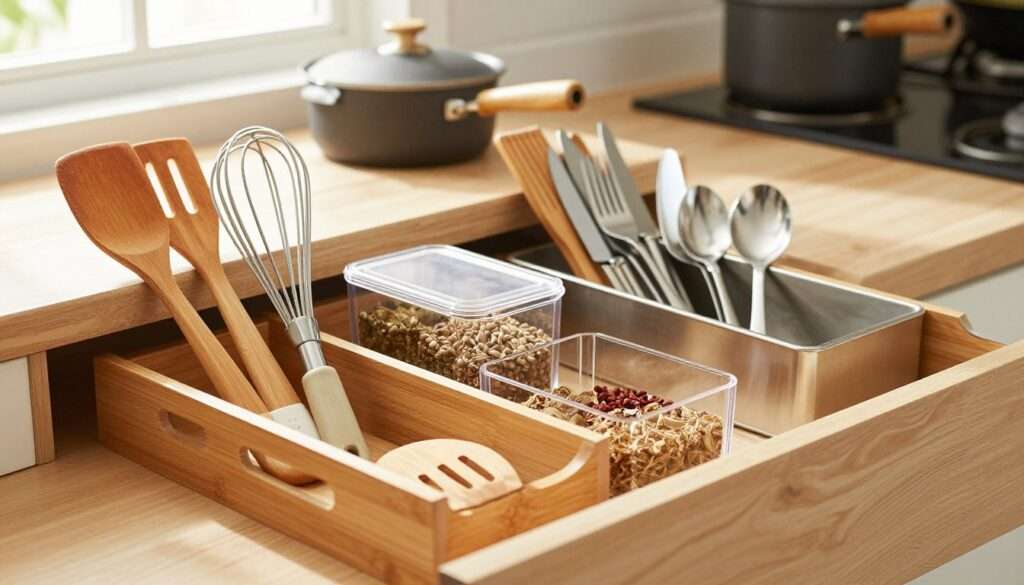
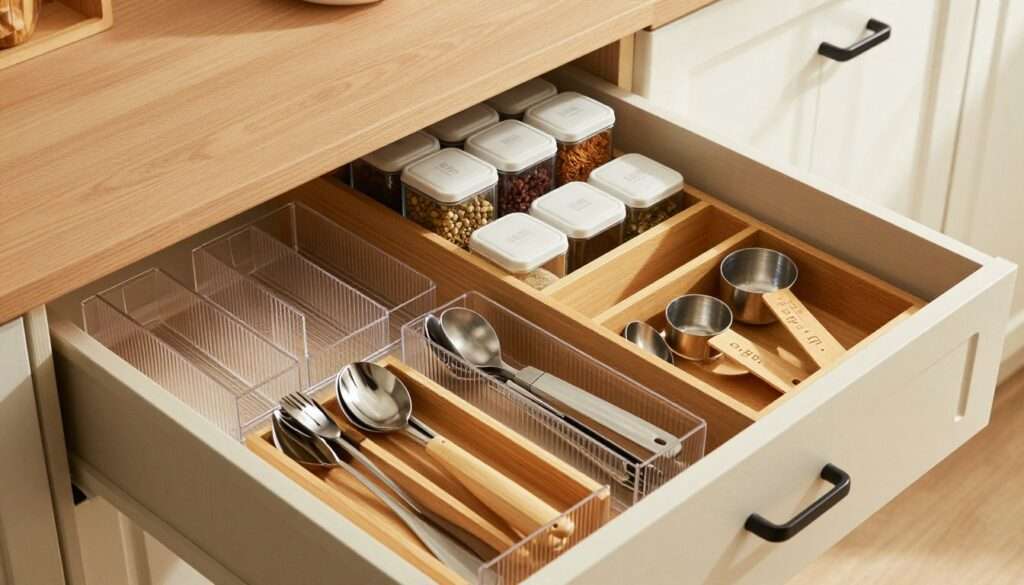
Expandable bamboo trays like Pipishell give a neat fit for mixed flatware. Deep-compartment bamboo units such as Umilife handle taller items with 2.5″ compartments. Plastic trays from Madesmart work well where spills or frequent washing happen. Knife docks with cork or beech dividers protect blades and users. Modular systems like Joseph Joseph Blox and ORGA-LINE let you reconfigure compartments as needs change.
How to match organizers to common drawer categories: cutlery, utensils, knives, spices, cookware
Cutlery does best in shallow trays with many small slots. Use long compartments for spatulas, ladles, and whisks so tools lie flat and don’t tangle. Store knives in felt-backed or cork-lined inserts to avoid dulling and to boost safety. Tiered spice inserts and shallow risers keep labels visible and prevent stacking confusion. For pots and lids, pegboard-style systems or trim-to-fit pegs stop shifting and make retrieval easier.
Why having at least one long compartment is critical for utensils and spatulas
Long compartments prevent tool overlap and reduce noise when drawers open. A dedicated space for spatulas and whisks keeps handles accessible and protects silicone heads. That single long slot often yields the biggest daily payoff in kitchen storage solutions, cutting search time for common cooking tools.
| Organizer Type | Best Use | Key Benefit |
|---|---|---|
| Expandable Bamboo Tray (Pipishell) | Mixed flatware and utensils | Adjusts to drawer width; warm, durable finish |
| Deep-Compartment Bamboo (Umilife) | Tall utensils, wooden spoons, spatulas | 2.5″ depth for vertical clearance and neat stacking |
| Plastic Trays (Madesmart) | High-use drawers; messy items | Easy to clean; anti-slip bases available |
| Knife Dock (cork or beech) | In-drawer knife storage | Blade protection and secure placement |
| Modular Systems (Joseph Joseph Blox, ORGA-LINE) | Custom compartment layouts | Flexible configuration for changing needs |
| Tension-Spring Dividers & Pegs | Bakeware, platters, pots and lids | Secure tall or deep items and prevent shifting |
Best materials and finishes for kitchen drawer organizers
Choosing the right material is key. It affects how your drawers look, how long they last, and how much upkeep they need. Here’s a guide to help you pick the best drawer organizers for your kitchen and daily habits.
Bamboo is great for those who care about looks and the planet. Brands like Pipishell and Umilife offer bamboo trays that are waterproof and stain-resistant. They look good next to wood cabinets.
Bamboo is porous, so don’t soak it. Wipe it with a damp cloth and let it dry completely. Occasional treatment with mineral oil or wood conditioner helps prevent warping and keeps the finish bright.
Plastic models from Madesmart and Lifewit are perfect for busy, wet kitchens. They resist stains, rinse quickly, and often have non-slip pads and soft-grip liners. Plastic is easy to care for, making it a top choice for those who prefer low maintenance.
Metal trays and inserts, like steel mesh or alloy spice racks, are easy to clean and dry fast. Honey-Can-Do style steel inserts handle heavy use and provide good airflow for utensils. Some find metal less warm visually, but it’s durable and quick to dry.
Cleaning routines vary by material. For bamboo, hand-wipe and air-dry, with occasional oiling. For plastic, a quick rinse or dishwasher-safe option works when allowed. For metal, wipe with a mild detergent and towel dry to avoid spots. These differences affect daily convenience and long-term condition.
Decide between premium wood and plastic based on your priorities. Choose hardwood or maple from Williams Sonoma for a refined look and periodic hand-washing and conditioning. Pick plastic for moisture-prone kitchens or those who want easy upkeep. Select metal for rugged, easy-clean solutions for spice inserts or heavy utensils.
| Material | Pros | Cons | Best use |
|---|---|---|---|
| Bamboo / Hardwood | Attractive finish, sustainable, durable when cared for | Needs hand-washing, periodic oiling, avoid soaking | Visible drawers, premium kitchens, eco-conscious buyers |
| Plastic | Low maintenance, stain-resistant, water beads off | Can look cheaper, may warp with heat over time | Wet environments, busy households, families with children |
| Metal | Very durable, easy to clean, quick drying | Cooler aesthetic, possible scratches or rust if low grade | Heavy-duty use, spice inserts, industrial or modern kitchens |
| Engineered systems | Designed to fit rails and hardware, modular | Higher cost, specific to drawer systems like TANDEMBOX | Custom cabinetry, integrated kitchen systems |
Choose based on your needs. If you’re short on time, go for plastic. For visible drawers and sustainability, pick bamboo or maple. For heavy use and spice racks, metal is often the best choice. Remember, material considerations are key when picking the best drawer organizers for your home.
Top-rated organizer styles and product examples
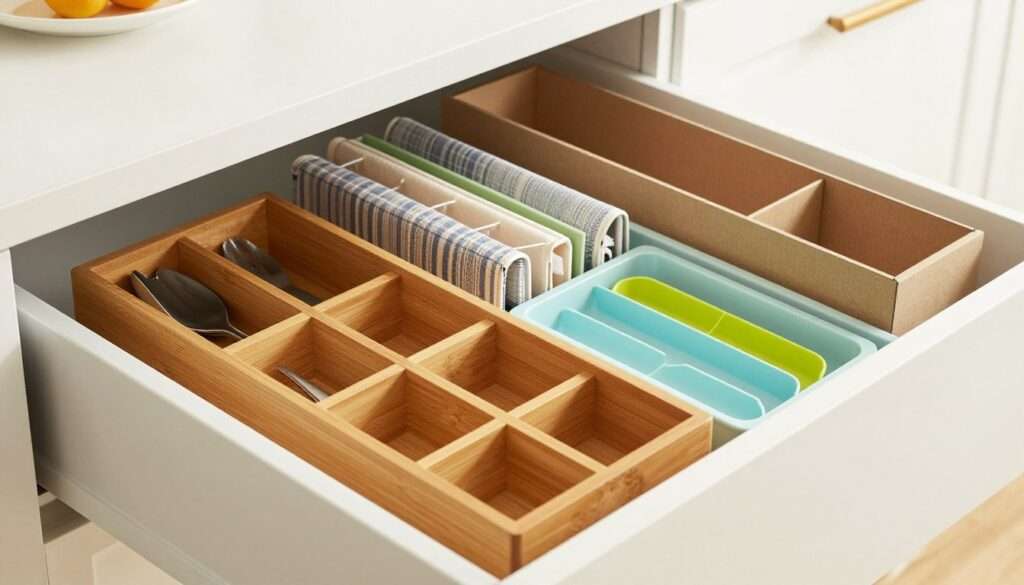
Choose organizing styles that match drawer depth, utensil length, and cleaning needs. This guide highlights tested options and real-world fits. So, you can pick the best solution for your kitchen layout.
Pipishell Bamboo Expandable Drawer Organizer as an overall favorite
The Pipishell Bamboo Expandable Drawer Organizer is a top pick. It expands to about 19.6″ wide and has multiple long compartments and smaller slots. It measures roughly 16.73 x 12.99 x 1.89 in.
A waterproof coating helps resist spills. Hand-wash care keeps the bamboo looking fresh.
This model works well where medium-depth drawers need flexible layouts. Tested kitchens found it reduces shifting for most utensils. It keeps a natural finish on display.
Umilife deeper organizer for tall compartments
Umilife targets tall utensils with 2.5″ deep compartments. It measures around 17 x 13 x 2.5 in. The deeper bamboo trays fit spatulas, whisks, and ladles with room to spare.
Some compartments are quite long. This can let narrow items slide unless grouped or cushioned with liners.
Use Umilife in drawers where height, not just width, is the limiting factor. It pairs well with non-slip pads to prevent movement.
Madesmart and other plastic trays for easy cleaning and anti-slip features
Madesmart offers durable plastic trays that clean quickly and resist stains. Typical dimensions around 1.8 x 12.9 x 16 in fit many standard drawers. Features like non-slip pads and soft-grip linings keep utensils in place during opening and closing.
Plastic trays from brands like Madesmart excel in busy households. They need frequent wiping and spill resistance. They tend to be lighter and cheaper than premium wood options.
Knife Dock solutions for safe in-drawer knife storage
Knife Dock systems use bamboo and cork composites to protect blades. A typical slim Knife Dock measures about 15 x 6 x 2.7 in and fits most drawers. Cork dividers cushion edges and prevent dulling.
Combine Knife Dock inserts with a broader organizer layout. This keeps knives separate and reduces accident risk.
| Product | Material | Best use | Key specs | Price range |
|---|---|---|---|---|
| Pipishell Bamboo Expandable Drawer Organizer | Bamboo | Versatile, mixed utensil drawers | Expands to 19.6″, 16.73 x 12.99 x 1.89 in, waterproof coating | $25–$45 |
| Umilife Deep Bamboo Organizer | Bamboo | Tall utensils and spatulas | 17 x 13 x 2.5 in, 2.5″ compartment height | $30–$50 |
| Madesmart Plastic Tray | Plastic with soft-grip lining | Easy-clean, anti-slip needs | 1.8 x 12.9 x 16 in, non-slip pads | $18–$35 |
| Knife Dock Bamboo/Cork Insert | Bamboo/cork composite | Safe in-drawer knife storage | 15 x 6 x 2.7 in, cork dividers | $20–$40 |
| Beech wood knife insert | Beech wood with felt backing | Multiple blade lengths | 17 x 9 x 2 in, felt backing | $40–$90+ |
Other notable choices include adjustable systems like Rebrilliant Bledsoe and Lipper International bamboo dividers for sturdiness. ORGA-LINE components suit integrated cabinet lines. Entry-level expandable plastic trays from Wayfair give a low-cost, effective option for renters.
Tested products covered a price span from roughly $18 to $80. Premium pieces from Williams Sonoma and bespoke beech inserts can exceed $90. They are for high-end kitchens seeking a cohesive look.
Customizable and expandable organizers for non-standard drawers
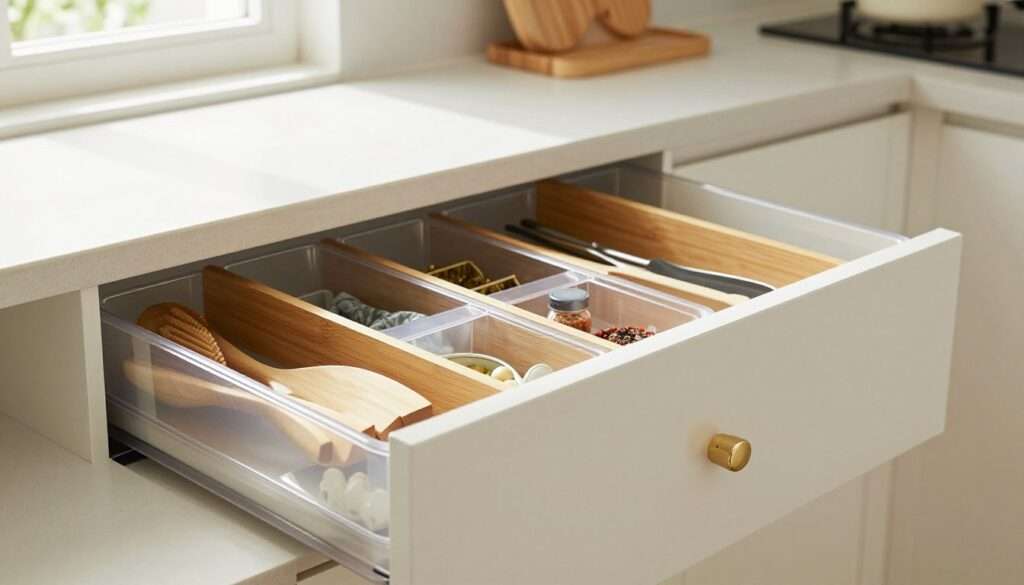
Not every drawer fits a standard tray. For odd widths, deep bottoms, or built-in cabinetry, pick solutions that adapt. This guide shows how to use expandable drawer organizers, adjustable divider systems, and trim-to-fit or pegboard cookware organizers in real kitchens.
How expandable organizers work and common expansion pitfalls
Expandable drawer organizers have telescoping sides or spring tension to fit various widths. Brands like Pipishell and OXO offer adjustable ranges. But, always measure the drawer’s inside width at the front, middle, and back.
Pipishell adds 1.6″ of width, while OXO’s notched ranges might not fit exactly if your drawer measurement is between stops.
Some Lifewit models have sticky sliding tracks. Also, systems with shallow notches might not fit snugly. Test the expansion points against your drawer width before buying.
Adjustable divider systems and modular trays for a tailored fit
Aluminum or plastic divider sets can create custom compartments. Tension-spring dividers adjust within a range, like 18–22″. ORGA-LINE flexible dividers work well with European cabinet hardware for a clean look.
Modular trays stack or nest for different compartment mixes. Stackable plastic modules sort small gadgets, while brushed aluminum dividers are sleek for flatware and knives. Avoid kits with impractically small slots for daily tools.
When to use trim-to-fit systems or pegboard-style cookware organizers for deep drawers
Trim-to-fit organizers are for uncommonly wide or deep drawers. You’ll need basic woodworking tools or a carpenter’s help. Maple pegboard cookware organizers can be cut to size with a table saw for peg placement.
Pegboard organizers are great for deep drawers because pegs secure tall stacks. Trim-to-fit organizers offer a permanent solution but require DIY skills. If DIY is not your thing, consider professional installation or choose modular systems that don’t need cutting.
Customizable organizers are key for flexibility. Match expandable organizers to your drawer width, adjustable dividers for mixed tool lengths, and trim-to-fit or pegboard organizers for heavy cookware and deep drawers.
How to choose the best drawer organizer for your space
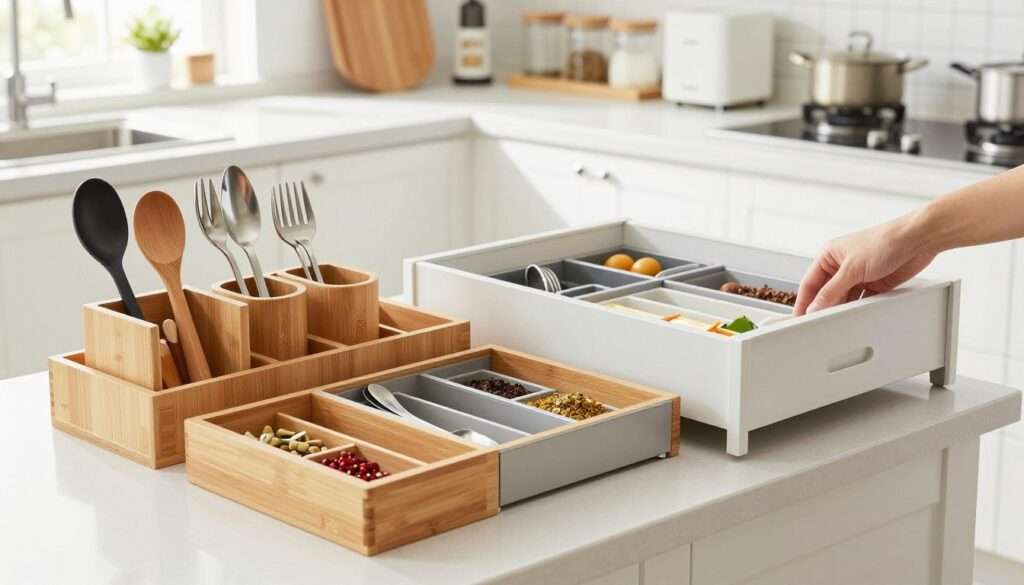
Choosing the right organizer starts with clear measurements and a plan. Note the drawer dimensions, clearance, and any hardware like Blum or Hettich slides. A careful approach prevents surprises like a tray being too high or an expandable unit hitting a hinge.
Measure before you buy: Use a tape to measure the internal width, depth, and height. Record the front-to-back depth and the distance between slide rails. When measuring, check the expansion range on adjustable models and note any notches that limit movement. Also, account for drawer hardware clearance with systems like TANDEMBOX or MOVENTO if you plan ORGA-LINE components.
Assessing compartment mix: Aim for a balanced mix of compartments. Pair small flatware slots with at least one long compartment for spatulas and whisks. Serious Eats testing shows organizers with medium variety perform best for daily kitchens. Small compartments keep forks and spoons tidy. Longer slots stop whisks and ladles from jamming other items.
Material considerations: Match materials to your cleaning habits and kitchen humidity. Choose plastic for wet zones and easy rinsing. Pick bamboo or hardwood for a warm look and sustainability if you will hand-wash and oil occasionally. Select metal for heavy use, tiered spice inserts, or where rigidity matters.
For deep drawers, consider tall dividers or peg systems to secure platters and cookware. Verify that any modular ORGA-LINE pieces fit your cabinet branding before ordering built-in solutions.
When uncertain, sketch the drawer layout and place measurements against organizer specs. This habit reduces returns and ensures the chosen layout supports daily workflow and long-term durability.
Kitchen drawer organizer ideas for specific use cases
Well-planned drawers save time and keep things tidy. Use clear layouts to keep tools easy to see and reach. Here are some practical ideas for organizing cutlery, large utensils, spices, and cookware.
Cutlery and daily flatware layout ideas for quick access
Put small compartments for forks, knives, and spoons at the drawer’s front. This layout helps you quickly find what you need during meals. Avoid small slots that can trap utensils. Instead, use moderate-sized cells for easy access.
Save space beside the cutlery for serving forks, tongs, and steak knives. This keeps all your everyday flatware in one spot, making cleanup easier.
Large utensil layout: whisks, spatulas, ladles—using long compartments effectively
Use a long compartment for big tools like spatulas and whisks. Choose trays or organizers with 2.5″ walls to prevent items from falling out.
Organize tools by function or length. Place less-used items in the back of deeper drawers. This frees up space for daily use.
Spice drawer inserts and tiered racks to maximize visibility and access
Use tiered racks or inserts to see labels easily and fit different drawer sizes. Low-angle tiers keep jars secure and visible.
Combine narrow spaces for packets and modular inserts for jars. This supports flexible spice arrangements and prevents jars from rolling.
Pots, pans, and lid organization using pegs and deep-drawer systems
Deep drawers work well for cookware with pegboard-style peg sets. Moveable pegs create custom cells for pots, pans, and lids, keeping them upright.
Trim-to-fit peg bases might be needed for nonstandard depths. Pair pegs with deep drawer dividers for each pan to have its slot and lids to stand vertically.
| Use Case | Recommended Organizer | Key Benefit |
|---|---|---|
| Cutlery & flatware | Moderate compartment trays, ORGA-LINE dividers | Faster access, reduced shifting, tidy cutlery organization |
| Large utensils | Long compartment trays, deeper organizers (2.5″ walls) | Contains tall tools, prevents tipping, easy reach |
| Spices | Tiered racks, alloy steel four-tier spice drawer inserts | Full visibility, higher capacity, stable jar storage |
| Pots, pans, lids | Maple pegboard systems, deep-drawer peg sets | Customized slots, upright lids, improved pots and pans organization |
Installation and maintenance tips for long-lasting organization
Installing and caring for organizers is key to keeping drawers in top shape for years. Start by placing the organizer in the drawer and adding items. Then, close the drawer to check if everything fits well. This step helps avoid any rubbing or binding issues.
How to install expandable and tension-spring dividers securely
Before expanding any unit, measure the drawer’s inside length and width. For expandable trays, extend them until they fit snugly against the drawer walls. Try filling the organizer with everyday items to see if it shifts when the drawer opens.
When using tension-spring dividers, place them between opposing faces and twist or compress to lock. Make sure not to overstretch them. For systems like ORGA-LINE, match the mounting pattern to TANDEMBOX or MOVENTO rails for a perfect fit.
Cleaning routines for bamboo, plastic, and metal organizers
Wipe plastic and metal trays with a damp cloth and mild detergent, then let them air-dry. Plastic is great for heavy-use drawers because it rinses quickly and handles moisture well.
For bamboo organizers, hand-wash them gently and wipe with a damp cloth. Use a boar-bristle pastry brush to sweep crumbs from corners before wiping. Let bamboo dry completely in open air. Applying mineral oil or a food-safe wood conditioner periodically will restore its shine and prevent splitting.
Small tricks to stabilize and protect drawer contents
Layer soft-grip liners inside organizers to stop slipping and reduce noise. Place non-slip pads under trays when drawers are shallow or the organizer lacks a keyed base. Felt-backed knife inserts protect blades and drawer bottoms from scratches.
| Task | Recommended approach | Why it helps |
|---|---|---|
| Installation fit test | Fill organizer, close drawer, observe clearance | Prevents rubbing and ensures usable space |
| Expandable trays | Extend to notch or wall contact; confirm end-to-end fit | Secures organizer and eliminates side-to-side shift |
| Tension-spring dividers | Set between faces within expansion limits | Stable support for deep-drawer layouts |
| cleaning bamboo organizers | Hand-wash, brush crumbs, air-dry, oil occasionally | Maintains finish and prevents warping |
| Plastic/metal care | Quick rinse, wipe dry, use soft liners | Fast maintenance and long life |
| Non-slip drawer ideas | Soft-grip liners, felt pads under trays | Keeps contents steady and reduces noise |
| maintenance drawer organizers | Monthly sweep, spot wipe, seasonal oiling for wood | Extends lifespan and keeps drawers hygienic |
Regular checks and small upgrades save time. Tightening placement, using liners, and following care steps make organizers feel built-in. The right approach to maintenance keeps a kitchen tidy and reliable for years.
Practical organizing steps and kitchen organization tips
Begin with a simple plan before you buy organizers. Measure the drawer’s width, depth, and space inside. Then, take everything out and sort items into keep, toss, and donate piles. This quick audit helps you see what organizers you really need.
Declutter first: edit unused or duplicate kitchen items before buying organizers
Get rid of broken tools and duplicates. Keep only your favorite spatula or ladle. Serious Eats testers say fill organizers only after you’ve pared down. This way, you buy the right size and avoid wasting space.
Group like items by function or length to design compartments logically
Organize utensils by length and use. Put whisks and tongs in a long compartment. Store daily cutlery in shallow trays near the prep area. Use small bins for gadgets and larger dividers for spatulas and ladles.
Staging and testing: fill and test organizers to check for shifting and clearance
Stage the organizer in the drawer and load it as you would daily. Slide the drawer to check for rubbing or shifting. Adjust compartments or add non-slip pads until items stay put. ORGA-LINE style flexible dividers work well for coordinating multiple drawers.
Follow this sequence: measure, declutter kitchen drawers, choose organizers with mixed compartment sizes, stage contents, and test operation. Staging drawer organizers and making small adjustments leads to long-term success in organizing kitchen drawers.
Conclusion
Small upgrades can make a big difference in your kitchen. Start by measuring and decluttering. Then, pick mid-priced options like Pipishell or Madesmart for durability and easy care.
Choose a mix of compartment sizes and include at least one long slot. This will help you store flatware, spatulas, and ladles neatly. It makes daily tasks easier.
Customizable systems and pegboard-style solutions are great for odd drawer sizes and deep cookware. Tiered spice inserts improve visibility. For integrated cabinetry, use furniture-grade dividers with TANDEMBOX and MOVENTO hardware for a professional look.
Knife storage is key, focusing on safety. Use beech wood or felt-backed inserts to protect edges and hands.
Maintenance is important: wipe plastic or metal trays for quick cleaning. Oil bamboo trays occasionally to keep them lasting longer. A simple routine of grouping items by function and testing layouts helps prevent clutter.
These kitchen storage solutions are affordable and make a big impact. They help keep your kitchen organized and efficient.
Find the right mix of measurement, material, and compartment size. Invest in top rated drawer organizers that fit your needs. Your kitchen will run smoothly and safely every day.
FAQ
What are the top drawer organizers every kitchen needs?
Every kitchen needs a cutlery tray for daily use. You’ll also want a long-compartment organizer for spatulas and whisks. A knife insert or KnifeDock is essential for safe blade storage.
Tiered spice inserts or racks help keep spices visible. Pegboard-style or trim-to-fit systems are great for pots, pans, and lids. Modular plastic trays and adjustable divider sets are perfect for small gadgets and odd-shaped items.
Why does drawer organization matter for kitchen organization?
Organized drawers make it easier to find what you need quickly. This saves time and reduces the risk of accidents. They also protect your items from damage.
Well-organized drawers improve your meal prep workflow. They make your kitchen more efficient and less stressful. Plus, they help extend the life of your utensils and knives.
How do I match organizer type to different drawer categories?
Use cutlery trays for flatware and long compartments for cooking tools. Knife inserts are perfect for blades, while tiered inserts work well for spice jars. Pegs are great for cookware and lids.
For deep drawers, consider tall tension-spring dividers or pegboard systems. Shallow drawers do well with low-profile trays. Place daily items at the front and less-used items towards the back.
Which materials are best: bamboo, plastic, or metal?
Plastic is great for easy cleaning and wet environments. It’s stain-resistant and quick to clean. Metal, like steel mesh or alloy, is durable and dries fast.
Bamboo and hardwoods offer a sustainable look and are durable. They need hand-washing and occasional treatment. Choose based on your care level and desired look.
How do I care for bamboo organizers versus plastic and metal?
Bamboo should be wiped with a damp cloth and air-dried. It needs occasional mineral oil or wood conditioner. Avoid soaking bamboo in water.
Plastic trays are easy to clean and dry quickly. Many have non-slip pads and liners. Metal organizers should be rinsed and dried to avoid corrosion.
What makes the Pipishell Bamboo Expandable Drawer Organizer a top pick?
The Pipishell Bamboo Expandable Drawer Organizer is a top pick. It has a waterproof coating and expands up to 19.6 inches. It has a mix of long and small compartments and a shallow profile.
It combines aesthetics with useful compartment variety. Like other bamboo pieces, it requires hand-wash care and complete drying.
What should I watch for with expandable organizers?
Measure your drawer width carefully. Some expandable models may not reach your exact width. OXO-style notches can be limiting, and some mechanisms can bind.
Test the expansion range against your drawer. Consider trim-to-fit options only if you have the tools and skill to cut safely.
Are adjustable divider systems and modular trays worth it?
Yes, adjustable dividers and modular trays are worth it. They let you create custom compartments for irregular items. They’re great for remodels or when outfitting multiple drawers.
But, be careful not to make compartments too small. Aim for a balance of small, medium, and long compartments.
When should I consider ORGA-LINE or integrated drawer systems?
Consider ORGA-LINE or integrated systems for built cabinetry. They fit furniture-grade drawers and offer a cohesive look. They’re ideal for remodels or new cabinetry where hardware compatibility is known.
How do I choose organizer size and compartment mix?
Measure your drawer dimensions first. Choose an organizer with a mix of compartment sizes. Small slots for forks and spoons, medium for serving tools, and at least one long slot for spatulas and whisks.
Deep drawers may need taller compartments or peg systems. Test a staged fill to ensure items don’t shift and the drawer closes freely.
What are common pitfalls when buying drawer organizers?
Be wary of expandable models with notch systems that don’t reach precise widths. Modular kits with too-small pockets are also a problem. Trim-to-fit systems require saw work.
Consider drawer hardware and under-mounted slides that can limit space. Measure carefully and prioritize organizers with varied compartment sizes.
How should I install tension-spring dividers and expandable trays?
For tension-spring dividers, compress and seat them securely. Verify they hold under load. Slide-in expandable trays need positioning then expanding until they contact both sides.
Confirm the stops align with your drawer width. For integrated systems like ORGA-LINE, follow manufacturer mounting guidance to match drawer rails and clearances.
What small tricks improve long-term organization?
Use non-slip pads beneath organizers to stop shifting. Felt-backed knife inserts protect blades and drawers. Soft-grip liners are good for delicate tools.
Sweep crumbs from corners with a small brush before wiping wood organizers. Periodically re-edit contents to remove duplicates or rarely used items.
How much do good drawer organizers cost?
Prices vary. Tested midrange items cost between and . Premium hardwood models can exceed .
Plastic and modular options are often more affordable. Integrated systems and cabinetry-grade ORGA-LINE components are pricier but offer tailored results.
What is the best approach to start organizing my drawers?
Start by measuring drawer dimensions and decluttering. Remove broken or rarely used items. Choose organizers that provide a balanced compartment mix and at least one long slot.
Stage contents in the organizer, test drawer operation and access, then tweak placement. Prioritize frequently used items in front and use modular or adjustable systems where standard trays don’t fit.
Which organizer types work best for spice drawers and pots/pans?
For spice drawers, tiered inserts or alloy steel four-tier racks enhance visibility. For pots, pans, and lids in deep drawers, use pegboard-style systems with adjustable pegs or trim-to-fit hardwood pegboards.
Peg systems require accurate measurement and sometimes trimming. They offer excellent protection and organization.