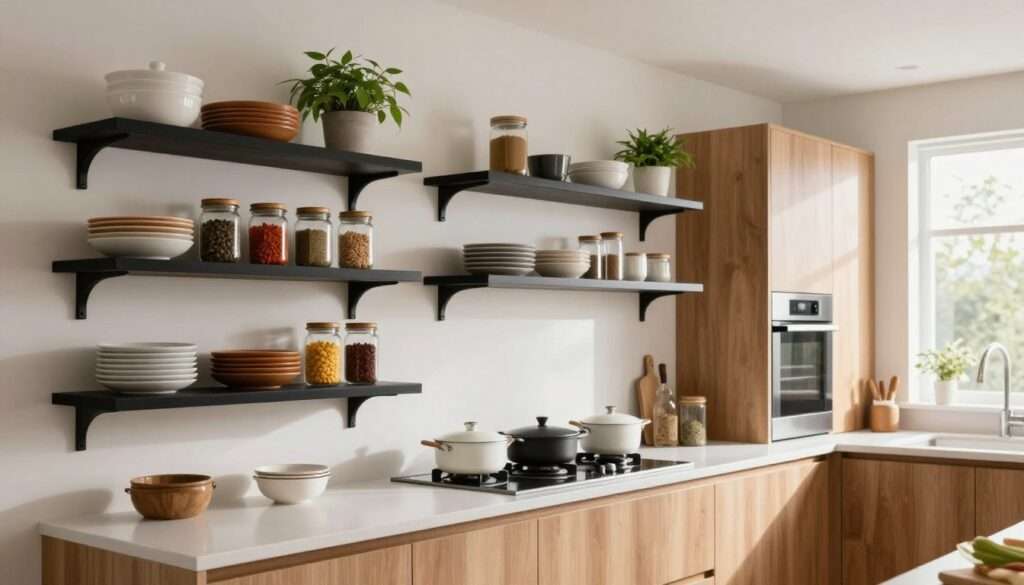

Adding open shelving can make a kitchen look bigger and more organized. This simple change can transform a space’s function and feel. Choosing the right wall shelves is key.
This article will guide you in picking stylish wall shelves for your kitchen. We’ll cover both form and function. You’ll learn about modern, farmhouse, and transitional styles.
We’ll explore different types of shelves, like floating and bracketed ones. You’ll also see options for corners, built-in units, and above sinks and range hoods. Expect tips on materials, installation, styling, budget, and maintenance.
Key Takeaways
- Open shelving can make kitchens feel larger and improve access to everyday items.
- Floating shelves and bracketed options suit different styles—from modern kitchen wall shelves to rustic farmhouse looks.
- Choose materials by use: solid wood or metal for heavy cookware; glass and laminate for decorative displays.
- Smart placement—above sinks, near ranges, and in corners—maximizes kitchen wall storage solutions.
- This guide will highlight top-rated picks, installation tips, and budget-friendly ways to update your space.
Why Wall Shelves Elevate Kitchen Design and Function
Wall shelves transform a kitchen’s look and use. They clear the space, offer clear views, and let light flow. People pick between showing off items or keeping things hidden, based on their style and needs.
Open shelving vs. closed cabinets: visual and functional differences
Open shelving lets you display dishes and books easily. Closed cabinets, on the other hand, keep things tidy and protected from dust and grease.
Go for open shelving for a stylish, easy-to-access look. Choose closed cabinets for a neat, organized space. Many kitchens mix both for a perfect balance.
How floating and wall-mounted shelves create an airy, modern feel
Floating shelves offer a sleek, modern vibe. They appear to float on the wall, creating a clean look. Wall-mounted shelves come in various styles to match any kitchen design.
Bracketed shelves add a touch of elegance and can hold more. Choose from materials like wood or solid veneers for a polished finish. The right shelf can enhance your kitchen’s look while matching your cabinets and countertops.
When wall shelves increase kitchen efficiency and accessibility
Wall shelves make kitchens more efficient by keeping essentials within reach. They’re perfect for storing spices, oils, and cookware, speeding up meal prep. They can also make small kitchens feel bigger by replacing upper cabinets.
Keep in mind, open shelving needs regular cleaning and smart storage. Closed cabinets are better for fragile or less-used items. Think about your cooking habits and storage needs before choosing the right wall storage for your kitchen.
Best wall shelves for kitchen decor
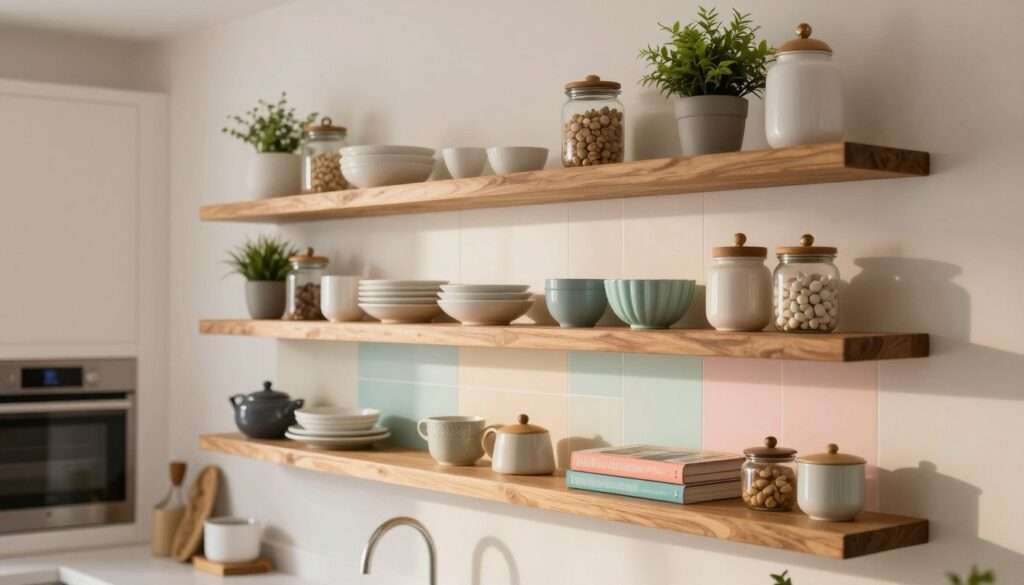
Choosing the right shelves is key for a kitchen’s look and use. Match the shelf style to your kitchen’s layout, cabinet finish, and daily use. The best shelves offer both display space and storage without cluttering the room.
Top styles that blend form and function for U.S. homes
Sleek white floating shelves are perfect for modern kitchens. They keep the space clean and work well above counters or ranges. Warm wood floating shelves add a cozy touch to transitional kitchens.
Reclaimed wood with metal brackets fit farmhouse and industrial themes. Glass shelves brighten small kitchens and show off shiny cookware.
Material comparisons: wood, metal, glass, and laminate
Solid woods like walnut, oak, and alder are strong and natural. They hold dinnerware and cookbooks well. Metal shelves and brackets are great for heavy loads and last long.
They’re perfect for industrial looks and utility-focused kitchens. Glass shelves add light and reflection, ideal for decorative items. Laminate and miter-folded veneer mimic wood and come in many colors. They match cabinetry for a seamless look.
Which shelf types work best for heavy items versus decorative displays
Use bracketed shelving or supported floating shelves for heavy items. These systems handle the load well. Thin floating shelves and glass are best for decorative items, plants, and glassware.
| Style / Material | Best Use | Weight Capacity | Visual Fit |
|---|---|---|---|
| Solid wood (walnut, oak, alder) | Dinnerware, cookbooks, display | High when properly thick and braced | Warm, classic, versatile |
| Metal shelving & brackets | Heavy pots, pans, utility storage | Very high; industrial strength | Modern-industrial, durable |
| Glass shelves | Decorative items, glassware, small displays | Low to moderate; depends on thickness | Bright, airy, contemporary |
| Laminate / miter-folded veneer | Budget-conscious matches to cabinetry | Moderate; consistent with built-in look | Clean, cohesive, customizable |
| Supported floating shelves (hidden hardware) | Mix of display and everyday use | Moderate to high with proper anchors | Modern kitchen wall shelves look |
Stylish kitchen shelving ideas to match popular kitchen themes
Choose shelves that echo your kitchen’s style to create cohesion and character. Match shelf tones to cabinetry or flooring. Mix open shelving with closed storage for a balanced look. Corner or stacked shelves add visual interest without crowding the layout.
Modern and contemporary: sleek white floating shelves and integrated lighting
Slim white floating shelves work well with subway tile or a geometric backsplash. This keeps sightlines clean. Use integrated LED strips or small puck lights to highlight ceramics and glassware.
For a cohesive scheme, align modern kitchen wall shelves with range hoods or cabinet lines. Minimal hardware and hidden brackets preserve the sleek, airy feel typical of contemporary designs.
Farmhouse and rustic: reclaimed wood and bracketed open shelving
Choose reclaimed or live-edge boards paired with chunky metal or decorative brackets for an authentic farmhouse look. Weathered finishes and knotty pine add warmth. This makes farmhouse kitchen shelves feel lived-in and cozy.
Place rustic wood shelves above worktops or near cooking zones to store spices and everyday dishes. Bracketed open shelving supports heavier loads and reinforces the traditional aesthetic.
Transitional and mid-century: warm wood tones paired with minimalist hardware
Warm woods like walnut or oak in thin floating profiles blend mid-century warmth with modern restraint. Pair these shelves with slim brass or matte black brackets. This preserves clean lines and subtle elegance.
Transitional shelving bridges styles by balancing display and storage. Use a few open shelves for curated pieces and closed cabinets for everyday clutter. This keeps rooms feeling tailored and functional.
Wall-mounted kitchen shelves: installation and placement tips
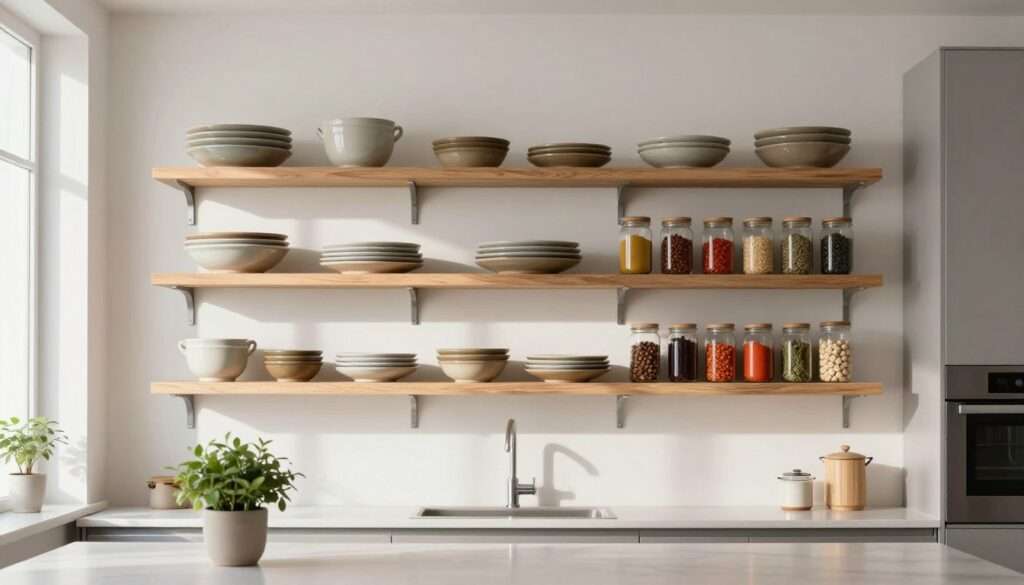
Start by measuring your wall’s height and width. Make sure to note any clearances for appliances and backsplashes. Choose shelf depth based on what you plan to store, like plates or small appliances. For more storage, consider three shelves stacked vertically.
Before drilling, use a stud finder to find the wall studs. If studs align with your shelf span, use them for maximum support. If not, heavy-duty toggles or molly anchors are good alternatives. These provide much more strength than regular plastic anchors.
Choose between hidden or visible brackets. Hidden brackets look clean but have weight limits. Visible brackets, like metal ones, support heavy items but need careful installation. Always check the manufacturer’s weight ratings and consider professional help for heavy loads.
Think about where you place your shelves. Shelves above sinks are great for plants and cleaning supplies. Shelves on either side of a range hood keep essentials within reach. Narrow shelves by windows let in light and hold glassware or herbs.
Consider lighting and backsplash materials when planning your shelves. Use continuous shelves in corners for efficient storage. For long shelves, spread out supports and use strong anchors to avoid sagging.
| Location | Recommended Depth | Support Type | Typical Use |
|---|---|---|---|
| Above sink | 6–8 inches | Floating hardware or small brackets | Plants, soap, small jars |
| Flanking range hood | 10–12 inches | Wall studs or heavy-duty brackets | Spices, frequently used dishes, decor |
| Across window | 5–8 inches | Concealed floating mounts or slim brackets | Glassware, small plants, decorative items |
| Stacked wall run | 8–12 inches | Stud-mounted brackets or rated floating systems | Cookware, plates, pantry storage |
| Corner or L-shaped | Varied by angle | Continuous supports, corner brackets | Small appliances, mixed storage |
Kitchen wall storage solutions for small and galley kitchens
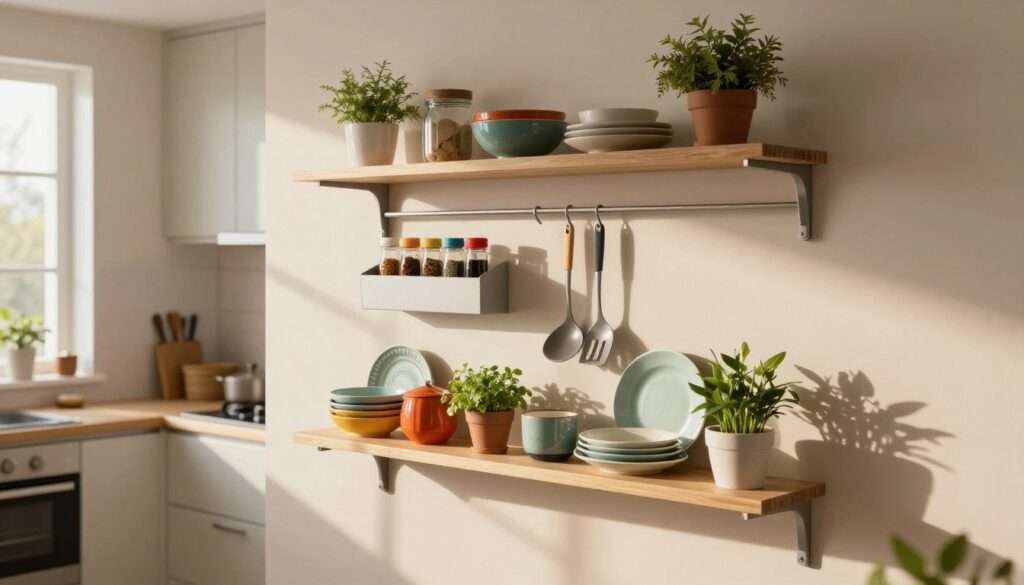
Small kitchens need smart planning. Practical wall storage turns tight spaces into efficient work areas. Use slim profiles and consistent finishes to keep it open and tidy.
Maximizing vertical space
Stacked shelves add depth without taking up floor space. Long floating shelves above counters offer a slim surface for dinnerware and decor. Brands like Decor Cabinets show how long, narrow platforms keep items reachable without being in the way.
Corner and compact shelving
Corner floating or L-shaped units turn unused angles into useful storage. Triangular shelves fit into tight spots near countertops, while tiny square shelves fill narrow gaps or create a decorative grid. These ideas are great for storing spices, mugs, or a few cookbooks.
Open pantry and built-in options
An open pantry shelving system displays jars and cookware for easy access. Built-in narrow shelves that fit between cabinets or beside appliances create a seamless look. Custom integrated shelving balances the space and makes the most of odd niches.
Tips for galley kitchens
In a galley layout, swapping upper cabinets for open shelving brightens the space and keeps essentials within reach. Choose shallow-depth shelves to avoid bumping elbows. Use matching materials and repeat shelf widths to avoid visual clutter and guide the eye down the narrow path.
Decorative kitchen shelving: how to style open shelves
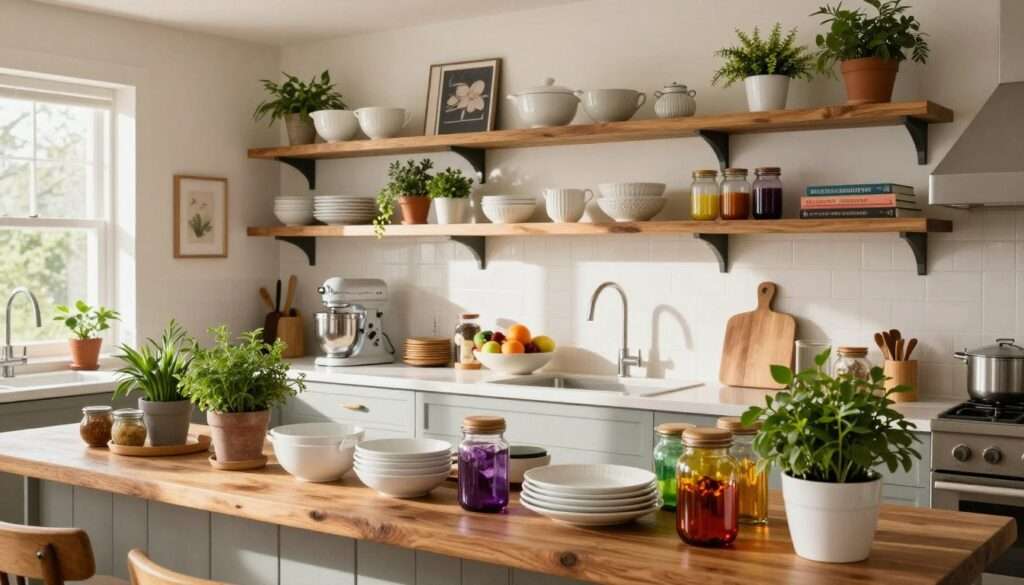
Open shelves are great for mixing storage and display. Mix practical items with carefully chosen decor to keep things tidy yet inviting. Think about how easy it is to reach items, how often you use them, and how they look together.
Balancing function and aesthetics
Put everyday dishes and cookware where you can easily reach them. This keeps your workflow smooth. Add cookbooks, a few bowls, and some decorative pieces to keep things interesting. Make sure to leave some space between items for a clean look.
Using plants, glassware, and ceramics
Bring some greenery into your kitchen with small potted herbs or ivy. Use clear glassware to add light and ceramics for texture and color. Group similar items together and vary their heights for a layered look.
Lighting tricks for display
Install LED strips or puck lights under shelves to brighten up your space. Use accent lighting for shelves in corners or by windows to highlight your decor. This makes your kitchen both functional and stylish.
Change up your decor with the seasons and store items you don’t use often higher up. Use matching containers for a uniform look. These tips will make your kitchen shelves both beautiful and useful, adding a fresh touch to your home.
Affordable kitchen wall shelf units and budget-friendly options
Choosing the right shelving can save money and improve your kitchen’s style. Look for options that are affordable, strong, and finished well. This way, your kitchen will look great without breaking the bank.
Cost-effective materials and ready-to-assemble units
Laminate and engineered wood are affordable and come in many colors. They look like real wood and are easy to clean. Ready-to-assemble units save on shipping and installation costs, making them a smart choice for many kitchens.
Metal shelving is great for heavy items like cookware and pantry goods. It’s often cheaper than solid wood but can hold more weight. Make sure to use strong anchors and hardware to avoid sagging.
DIY floating shelves and refurbishing reclaimed wood
DIY floating shelves let you customize your kitchen. You can choose the length, depth, and finish. Simple kits and bracket systems make installation easy and affordable.
Refurbishing old barnwood or live-edge slabs is a cost-effective way to add a unique touch. Sand, seal, and finish the wood to protect it from kitchen humidity. This approach combines thrifted finds with new hardware for a budget-friendly look.
Where to shop: big-box stores, online retailers, and local craftsmen
Big-box stores like Home Depot and Lowe’s have affordable shelving and hardware. IKEA offers modern, budget-friendly options that fit many styles.
Online marketplaces like Wayfair and Amazon have a wide range of prices and reviews. Brands like Northern Contours offer laminated options for a high-end look on a budget.
Local carpenters can solve unique space challenges and match your cabinetry. Their custom work might cost more, but it can save on waste and installation costs.
Practical tip: invest in quality anchors, brackets, and screws. Good hardware keeps your shelving sturdy and safe, protecting your items and family.
Top-rated kitchen decor shelves and product selection criteria
Choosing shelves for a kitchen is about taste and function. Start by thinking about what matters most. This includes how much weight the shelf can hold, how it looks near steam and grease, and if it fits with your cabinets and countertops.
Look for reviews that talk about long-term issues like sagging and hardware failure. Real feedback on weight capacity shows if a product really delivers. When you need to hold heavy cookware, compare bracketed systems to hidden floating mounts.
Quality materials and construction are key. Miter-folded veneer gives a clean look that hides plywood. Solid wood can be sanded and refinished if needed. Metal brackets from brands like Andersen or Zinc-coated supports are strong for frequent use.
Finish quality is important for daily use. Look for even veneer patterns, stain, and scratch resistance. Shelves near stoves or sinks should resist water and steam, as reviews often mention.
Match shelves to your kitchen’s finish for a cohesive look. A warm oak shelf can tie in with your cabinets. White shelves against dark tile create a bold contrast. Make sure shelves match cabinet heights and backsplash courses.
Use criteria when shopping for shelves. Read about load-bearing performance, finish durability, and installation ease. This helps you find the best wall shelves for your kitchen decor.
Practical maintenance and safety for kitchen wall shelves
Keeping shelves in good shape means they last longer and stay safe. Clean them regularly, know their weight limits, and check them often. This keeps your kitchen tidy and safe for everyone.
Wood shelves need a damp cloth and mild soap. Don’t soak them or let water sit. Re-seal or oil wood shelves every 1–3 years, based on humidity and use.
Metal shelves should be cleaned with gentle cleaners to keep their finish. Dry them well to avoid rust in damp kitchens.
Glass and laminate shelves are cleaned with a soft cloth and glass cleaner. Use mild cleaners on laminate and veneer to avoid damaging the finish.
Preventing sag and overloading
Always follow the weight limits set by the manufacturer. For heavy items, attach shelves to studs and use strong brackets. Shelving with brackets holds pots, pans, and mixers better than hidden brackets.
For long shelves, add supports in the middle or use thicker material. Use steel brackets or timber cleats for big items. Check and tighten fasteners every year.
Securing items and child-safe practices
Keep breakables and heavy items high up where kids can’t reach. Use lower shelves for everyday items like plastic storage and dishes. Install anti-tip hardware on shelves near counters that kids might climb.
Make sure you know what kind of wall anchors to use. Toggle bolts and molly anchors work well on most drywall. Lag screws to studs are strongest. If unsure, get a professional for heavy or complex jobs.
| Task | Frequency | Recommended Action |
|---|---|---|
| Surface cleaning (wood, metal, glass) | Weekly to monthly | Wipe with appropriate cleaner; dry metal; avoid harsh chemicals on veneer |
| Inspect mounting hardware | Annually | Check fasteners, tighten screws, look for corrosion or movement |
| Re-seal or oil wood shelves | Every 1–3 years | Apply sealant or oil suited to the wood species and kitchen humidity |
| Review load placement | When reorganizing or adding heavy items | Move heavy cookware to stud-mounted brackets or lower sturdy shelves |
| Child-safe check | After installation and yearly | Ensure secure anchoring, install anti-tip hardware, store hazardous items up high |
Conclusion
Choosing the best wall shelves for your kitchen decor is all about matching style, material, and load needs. For a modern kitchen, sleek floating shelves with built-in lighting add an airy feel. Farmhouse and rustic kitchens look great with reclaimed wood and bracketed shelves.
Transitional spaces can pair warm wood tones with simple hardware. Before you install, measure and plan for the weight each shelf will hold. Choose the right anchors and brackets for your walls.
Make sure the shelf finishes match your cabinets and backsplash for a unified look. Consider durable options like miter-folded veneer or solid wood. For small kitchens, use vertical space with stacked or corner shelves.
Balance open shelves with closed cabinets to show off your favorite items while keeping storage hidden. If you’re on a budget, try DIY floating shelves or reclaimed wood. For custom pieces, local craftsmen or big-box retailers offer ready-to-assemble options.
Always read reviews to ensure the shelves can hold the weight and last long. Keep your shelves clean and follow safety tips for anchors and child-safe placement. With careful planning and the right shelves, your kitchen will stay stylish and functional for years.
FAQ
What are the best wall shelves for kitchen decor that balance style and function?
The best wall shelves mix the right material and support for your needs. Sleek white floating shelves or miter-folded laminate/veneer shelves offer a modern look. They match cabinets well.
For heavy-duty use, choose bracketed wood or metal shelving. It supports cookware and appliances. Reclaimed wood with metal brackets fit farmhouse and industrial themes.
Glass shelves brighten small spaces and display glassware. Pick based on load capacity, finish quality, and how the shelf will look with your cabinetry, counters, and backsplash.
Open shelving or closed cabinets — which should I choose?
Open shelves visually lighten a kitchen and raise perceived ceilings. They keep frequently used items within easy reach. They encourage organization because contents are visible.
Closed cabinets conceal clutter and protect items from grease and dust. They are better for long-term storage of delicate pieces. A mix of open shelving for everyday items and closed cabinetry for concealment often works best.
Are floating shelves strong enough for dishes and cookware?
It depends on construction and mounting. Thin floating or glass shelves are best for decorative items, plants, and glassware. Heavy cookware, stacks of dinnerware, or small appliances need bracketed shelves.
Always check manufacturer weight ratings and use studs or heavy-duty anchors. Add mid-span supports for long spans.
How do I plan spacing and shelf depth for stacked or long shelves?
Measure wall height and width, then plan vertical spacing for practical reach. Three stacked shelves is a common configuration for maximizing vertical storage without crowding.
Depth depends on use: 8–10″ for display and glassware, 12–14″ for plates and bowls, and 16″ or more for cookware. Account for backsplash, hood clearances, and appliance placement when aligning shelves with existing elements.
What anchors and hardware should I use for drywall installations?
For best load-bearing capacity, anchor into studs. If studs aren’t available, use heavy-duty toggle bolts or Molly anchors rated for the expected load. Visible metal brackets provide both decorative support and higher weight tolerance.
Concealed floating hardware can be used for moderate loads but verify the rating and follow installation guidance. For long spans or very heavy loads, consult a professional.
Which materials resist kitchen humidity and grease best?
Metal shelving and high-quality laminate or 3D laminates resist humidity and are easy to clean. Solid hardwoods are durable and can be refinished but need sealing to resist moisture and grease.
Miter-folded veneer offers a cabinet-like edge but requires proper finish maintenance. Glass is non-porous and easy to clean but has lower load capacity. Choose finishes designed for kitchens and follow care guidelines to extend life.
What are budget-friendly options for kitchen wall storage solutions?
Affordable choices include laminate or engineered wood shelves, metal shelving systems, ready-to-assemble (RTA) units from big-box stores, and simple bracket-and-board setups. DIY floating shelf kits and refurbished reclaimed wood provide a custom look on a budget.
Prioritize quality anchors and brackets even with cheaper shelf boards to ensure safety and longevity.
How can I style open shelves without creating clutter?
Balance function and aesthetics by grouping similar items, using uniform jars for pantry goods, and reserving negative space for visual rest. Mix cookware and cookbooks with curated decor pieces, vary heights for interest, and keep frequently used items at reachable levels.
Rotate seasonal accents and limit the number of decorative pieces per shelf to maintain a curated, tidy look.
Should I add lighting to my wall-mounted kitchen shelves?
Integrated LED strips or puck lights enhance display and functionality. Under-shelf lighting illuminates work zones and highlights decorative objects, which is great for stacked or corner shelves. Low-profile LEDs are energy-efficient and easy to integrate; plan wiring routes before installation for a seamless finish.
What safety and child-proofing measures should I take?
Secure shelves to studs when possible and use proper anchors for drywall. Store heavy or breakable items out of children’s reach and reserve lower shelves for frequently used, safe items. Use top-mounted anti-tip hardware where appropriate, and inspect mounting hardware annually.
If in doubt about load or placement, consult a professional installer.
Where are the best places to buy stylish kitchen shelving?
Big-box retailers like Home Depot and Lowe’s offer RTA and budget-friendly options. Online marketplaces such as Wayfair and Amazon provide wide selections and reviews. IKEA is a good source for modern, affordable shelving.
For higher-end veneer or custom matches, brands like Northern Contours and local carpenters or craftsmen can provide tailored finishes and precise fit.
How do I prevent sagging on long shelves?
Use thicker shelving material, add mid-span supports, or choose metal brackets spaced appropriately. Anchor into studs for maximum support. For long continuous shelves, consider a bracket every 16–24 inches or engineered cleats for distributed load.
Verify manufacturer span guidelines and choose shelf depths and materials rated for your intended load.
How should I maintain wood, metal, glass, and laminate shelves?
Wood: wipe with a damp cloth and mild detergent; avoid prolonged moisture and reseal or oil every 1–3 years as needed. Metal: clean with non-abrasive cleaners and monitor for corrosion in humid areas. Glass: use glass cleaner and soft cloths to avoid streaks; avoid overloading.
Laminate/veneer: clean with mild cleaners and avoid harsh chemicals that strip finishes. Inspect mounting hardware periodically and tighten fasteners.
Can corner or L-shaped shelves solve tight-space storage problems?
Yes. Corner floating or L-shaped shelves convert underused corners into practical storage, and triangular units fit snugly into small niches. Tiny square floating shelves can fill narrow gaps or create decorative grids.
For galley kitchens, shallow stacked shelves and consistent materials help brighten the corridor without encroaching on workspace.
What criteria should I use when comparing top-rated kitchen decor shelves?
Look for durability (reports of long-term sagging or hardware failure), finish quality (consistent veneer and scratch resistance), and verified weight capacity. Trusted construction methods—solid wood, miter-folded veneer, and robust metal brackets—are signs of quality.
Read user reviews for real-world performance near stoves and sinks, and choose products that match your aesthetic and load requirements.
Are there recommended shelf depths for specific uses?
Yes. Narrow depths (6–8″) work for small decorative items, spice jars, and shallow displays. Standard display depths (8–10″) suit glassware and smaller plates. Deeper shelves (12–16″) accommodate dinnerware, stacked bowls, and small appliances.
Choose depths that clear backsplash and appliance profiles while keeping frequently used items within reach.
How do I match shelf finishes to existing cabinetry and backsplash?
Match shelf wood tone to cabinetry or flooring for cohesion, or use a contrasting finish—like white shelves against a dark backsplash—for visual interest. Consider how shelf profiles align with cabinet heights and backsplash lines; continuous long shelves can tie elements together visually.
Swatch materials next to your cabinets and counters when possible.