
Did you know mirrors and artwork can make a room look up to 30% bigger? This is why choosing the right wall art and decor is key, not just the room’s size.
Smart wall decor uses space wisely. It includes negative space, vertical lines, and mirrors. A big print, a mirror opposite a window, or a vertical gallery can add depth and light without taking up floor space.
Functional pieces like floating shelves, wall-mounted lights, and hooks are stylish and useful. They free up space and give the room a focus. Light-colored prints and a unified color scheme make small rooms feel open and connected.
These top wall decor ideas for small living rooms come from Pinterest trends and expert advice. By focusing on scale, spacing, and color, even small spaces can become cozy and inviting.
Key Takeaways
- Use mirrors and vertical art to create depth and reflect natural light.
- Choose one focal piece or a cohesive gallery to anchor the room.
- Prefer floating shelves and wall-mounted items to save floor space.
- Keep palettes light and consistent to maintain an open feel.
- Combine function and style with hooks, lights, and planters on walls.
Why Wall Decor Matters in Small Living Rooms
Wall decor greatly affects the feel of a small living area. Choosing wisely helps guide the eye and reduces clutter. This makes the room feel bigger. Designers say it’s key when every inch is precious in a small home.
How wall decor changes perception of space
A single, well-placed piece can stop the eye from wandering. A large artwork or a neat group creates a clear focus. This suggests openness. Mirrors opposite windows double the light and view, making the space feel deeper.
Balancing negative space and visuals
Space around art keeps a room from feeling cramped. Leaving room between frames and shelves makes walls look intentional. Built-in trim or a painted band can anchor a gallery while keeping walls open.
Choosing pieces that add light, depth, and personality
Light-background prints and neutral colors reflect daylight, keeping the room airy. Vertical pieces draw the eye up, making ceilings seem higher. Textured accents like rattan or wood slats add depth and personality without taking up floor space.
Minimalist designs are great for small spaces. Choosing minimalist wall art keeps the look calm and unified. Wall-mounted TVs and slim shelves free up floor space and focus attention.
Best Wall Décor Ideas for Small Living Rooms
Small living room wall art can transform a tight space. A clear focal point, reflective surfaces, and light prints make rooms feel larger and brighter. They also make the space feel more intentional.
Use one large-scale artwork as a focal point
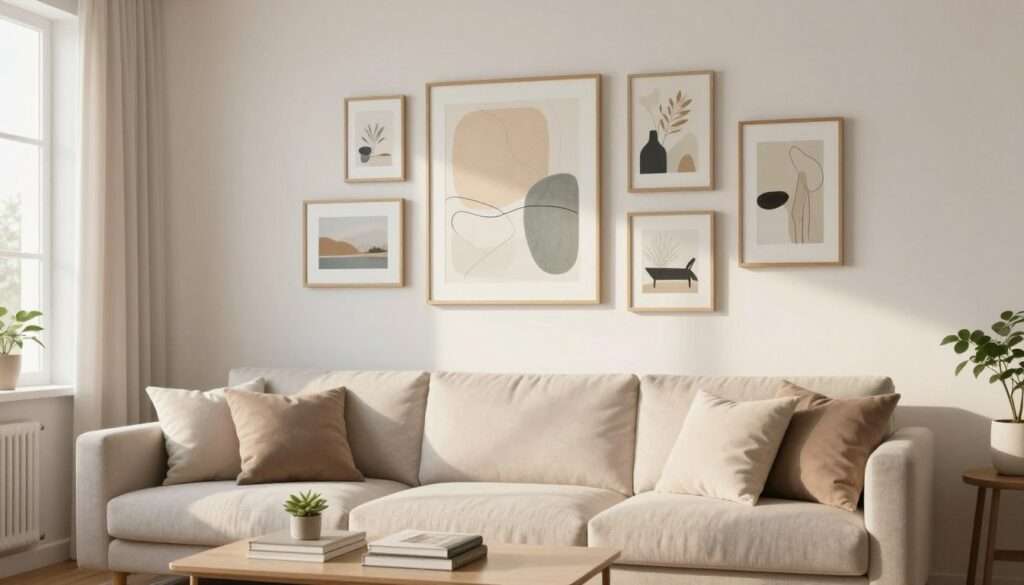
Choose a single oversized canvas or framed print to anchor the seating area. A large piece reads as one object, which reduces visual clutter and makes the wall appear broader. Follow simple sizing rules so the artwork complements, not overwhelms, the furniture.
Create a cohesive gallery wall with consistent spacing and palette
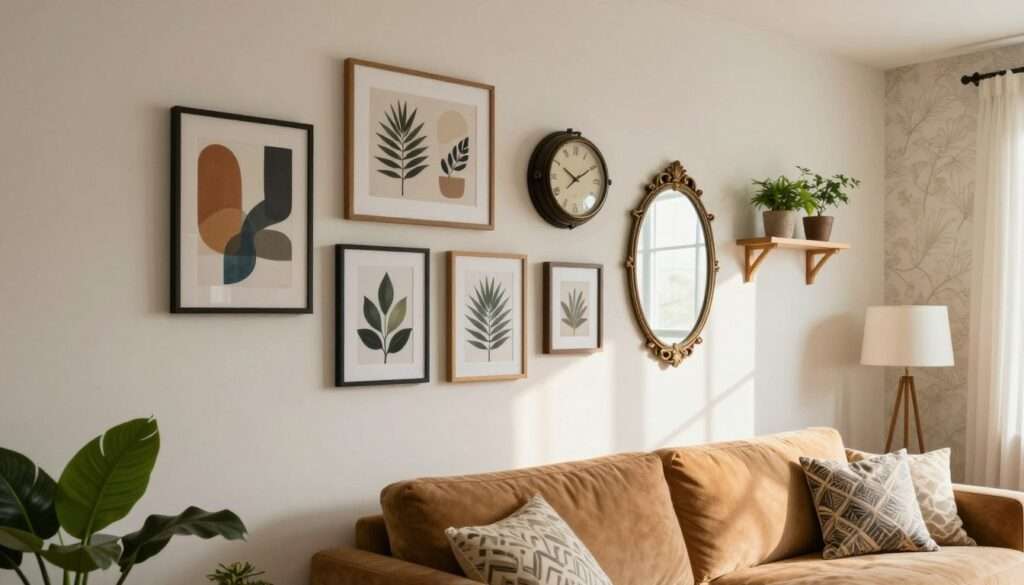
Group smaller works into a unified grid or salon-style layout with matching mats or frames. Keep spacing regular and pick two or three colors to repeat across pieces. This approach turns many images into a single, tidy statement that reads cleanly in tight rooms.
Employ mirrors to reflect light and visually expand the room
Place mirrors opposite windows or near lamps to bounce natural and artificial light. A large mirror or a cluster of small mirrors creates depth and a sense of openness. Choose simple frames or frameless options when aiming for airy, modern looks.
Opt for light, airy prints and neutral backgrounds to keep the space open
Select prints with pale backgrounds, soft pastels, or delicate line work to avoid heavy visual weight. Neutral abstracts and nature-inspired art add calm without crowding the eye. Use murals, painted trim, or a single accent wall if a bold look is desired while keeping other walls subdued.
- Tip: Pair oversize furniture with one large artwork to prevent competing focal points.
- Tip: Use ledge shelving for a single statement piece and a few curated items.
- Tip: Arrange small photo walls so they read as one composed element, not scattered bits.
Space-Saving Wall Decor Ideas for Compact Spaces
Small living rooms need decor that’s stylish but doesn’t take up too much space. Choosing wisely, we can turn narrow walls into useful displays. This keeps the room feeling open and easy to move around.
Floating shelves for display without floor clutter
Floating shelves are great for holding books, photos, and small plants. They save space on the floor. By using them, we can add vertical interest and style without feeling cramped.
Wall-mounted planters and vertical gardens
Wall-mounted planters bring plants into small living rooms without taking up a lot of space. Arranging them in a staggered pattern adds depth and texture. Vertical gardens are perfect above consoles or beside windows, adding a fresh touch.
Built-in or above-window shelving to utilize underused zones
Above-window shelving turns unused space into storage for decor and books. Built-ins make the most of corners and recesses, blending with the room’s architecture. Pairing high shelves with low-profile seating keeps the room feeling open.
Modern Wall Decor for Small Spaces
Small living rooms look better with a modern touch. Use neutral abstract prints and big canvases to create calm spots. Slim frames and floating styles keep art light on the wall, making the room feel open.
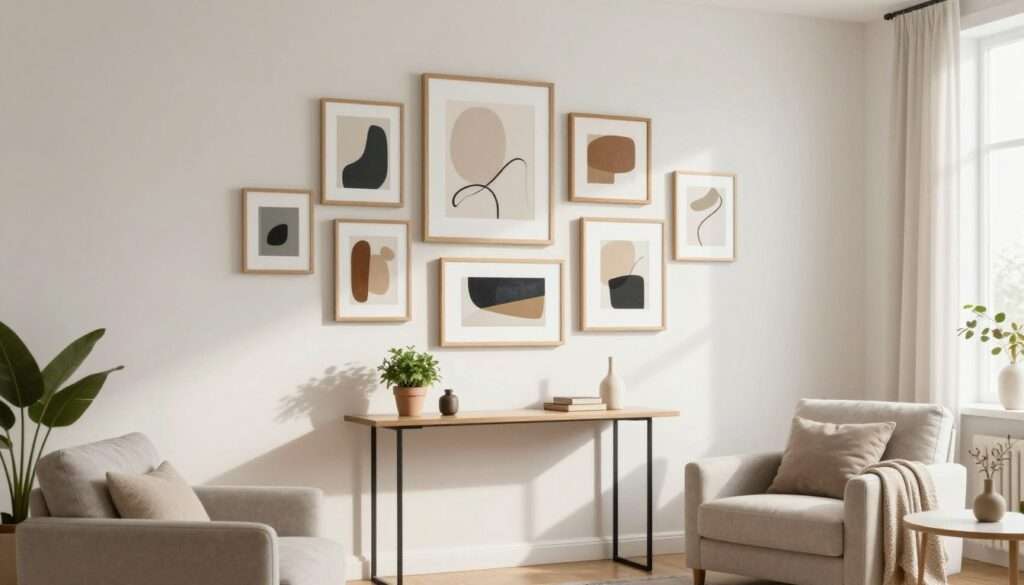
For small rooms, minimalist art works best with useful items. Metal hooks, slim sconces, and narrow shelves are both decor and storage. They help show off your favorite things without taking up floor space.
Using modern materials adds texture without making things heavy. Metal sculptures, acrylic panels, and thin frames bring contrast and simplicity. Wood slats and wire grids add warmth and a spot for changing art, fitting modern decor in small areas.
Putting the TV on the wall saves space and blends tech into the design. A slim mount keeps the screen out of the way. Surround it with art or shelves to make it look planned, not random.
For renters, easy-to-remove items like ledge shelves and wire grids are great. Mix simple abstract art with touchable things like textiles, small plants, and wood. This creates a modern, airy feel that shows off minimalist art and contemporary style.
Creative Wall Art for Cozy Living Rooms
Textile hangings, removable decals, and thrifted finds can make a small space cozy. These ideas add style without needing big furniture or big changes. Small changes can make a big difference in small living rooms.

Textile hangings and tapestries add softness and make the room quieter. A woven piece over a loveseat adds texture without taking up too much space. Pair a neutral tapestry with a curved sofa for comfort and flow.
Removable decals and temporary murals are great for renters who want to change things up. Small murals on one wall can be layered with tall curtains for drama. Decals let renters try big visuals without painting.
DIY and thrifted finds are budget-friendly ways to personalize a home. Framed Polaroids, woven baskets, and thrifted prints create a unique look. Printable digital art can be swapped out seasonally for a fresh look without spending much.
For small spaces, use wall decor ideas that save space. Vertical plant displays and wall-mounted shelves keep the floor clear. Simple storage hooks or floating ledges can hold decor and free up the floor.
When picking wall art for small living rooms, think about scale and balance. One bold textile or a few thrifted frames work better than many pieces. Keep things consistent in spacing and color to keep the room cozy and uncluttered.
| Idea | Best for | Cost | Key Benefit |
|---|---|---|---|
| Woven textile hanging | Above a sofa or bed | Moderate | Adds warmth and acoustic softening |
| Temporary mural or decal | Renter walls or accent zones | Low to moderate | Big visual impact without permanent change |
| Thrifted frames and prints | Gallery walls and eclectic displays | Low | Unique character at low cost |
| Printable digital art | Seasonal updates and swaps | Very low | Easy refresh and personalization |
| Vertical plant wall | Small corners and above consoles | Moderate | Brings life without using floor space |
Small Living Room Wall Art Placement and Sizing Tips
Choosing the right spot and size for your art makes a small living room feel more intentional. This guide will help you place art above furniture, ensure it’s easy to view, and create neat gallery walls without cluttering the space.
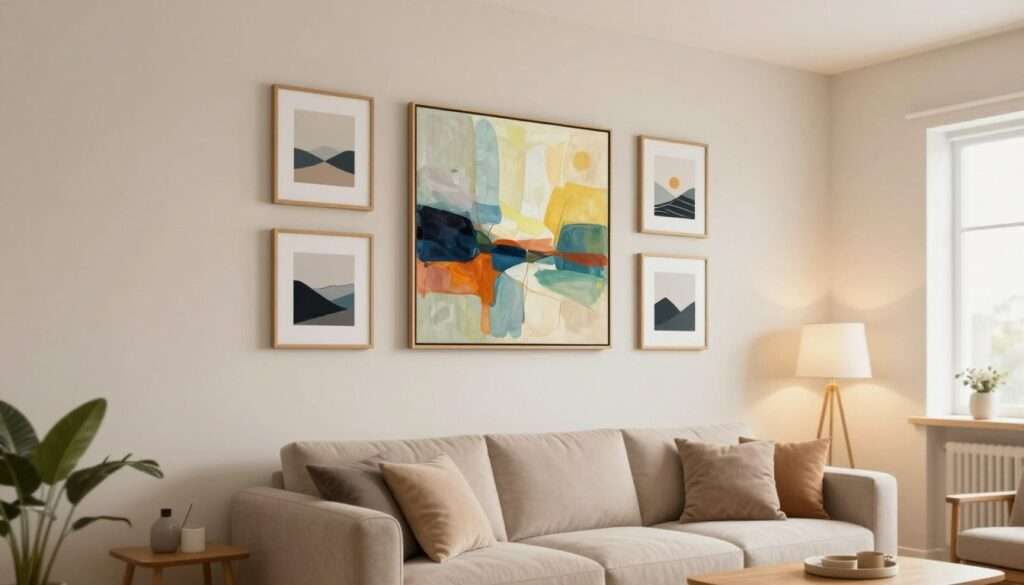
Using the 2/3 rule for art above a sofa
The 2/3 rule suggests art above a sofa should be two-thirds its width. This keeps the look balanced and avoids art that’s too big or too small.
Start by measuring your sofa. For example, if it’s 84 inches wide, choose art around 56 inches wide. Remember to leave some space on each side to avoid feeling cramped.
Proper hanging heights including the 57-inch guideline
Artwork should be at eye level for the best viewing. The 57-inch rule places the art’s center at about 57 inches from the floor. This height works well in most rooms and makes art easy to see from a seat.
If your ceiling is low or the art goes above a sofa, hang it lower. Place the bottom edge 6–12 inches above the furniture. For tall groupings, aim for the 57-inch mark as if it were one piece.
Arranging multi-piece sets and spacing rules for gallery walls
For multiple pieces, lay them out on the floor to find a good arrangement. This way, you can test sizes and spacing without drilling holes in the wall. Once you’re happy, mark the centers on the wall and hang them.
Keep the space between frames consistent. Choose 2–3 inches for a tight look or 4–6 inches for a more relaxed feel. Use a similar color or frame style to make the collection look cohesive.
| Situation | Recommended Size or Spacing | Practical Tip |
|---|---|---|
| Art above sofa | About 2/3 the sofa width | Measure sofa, subtract 1–2 inches per side for breathing space |
| Single wall piece | Center at 57 inches | Adjust down if placed over furniture so bottom edge sits 6–12 inches above |
| Small gallery wall | 2–3 inches between frames | Lay out on the floor first, then transfer to wall using paper templates |
| Large gallery grouping | 4–6 inches between frames | Balance with a unifying palette to avoid visual clutter |
| Flexible displays | Picture rails or ledges | Use ledge shelves to swap art at different heights without extra holes |
Minimalist Wall Art for Small Rooms
Minimalist wall art can make a small living room feel calm and open. Simple compositions, like a single oversized abstract or a clean line drawing, stop the eye from finding too many competing details. These choices work well with small living room decorating tips that focus on light, scale, and negative space.
Keeping compositions simple to avoid visual clutter
Choose one focal piece instead of many small frames. Let blank space surround the artwork so walls breathe. Pair slim frames and narrow mats with low-profile furniture so the art anchors the room without crowding it.
Monochrome and soft palette strategies to open the room
Monochrome prints or pale washes of color reflect light and reduce visual competition. Soft palettes like warm grays, beige, and muted pastels work with minimalist decor small spaces to create a larger feel. Textured elements, such as a wool throw or a light oak side table, add warmth without adding visual noise.
Combining minimal art with functional decor like hooks and sconces
Integrate useful pieces—wall hooks, slim sconces, and floating ledges—near artwork to keep surfaces clear. A brass or matte-black sconce can highlight a print and replace a floor lamp, following small living room decorating tips that maximize function and flow. Use simple, coordinated finishes so utility reads as design.
Nordic-inspired approaches offer a cozy outcome with few objects. Select open-legged sofas and clear coffee tables so wall art remains the visual anchor. Add subtle molding or wainscoting to ground a single piece and create a tidy, curated look that suits minimalist wall art for small rooms.
Styling Tips and Small Living Room Decorating Tips
Smart styling makes a small living room feel big and intentional. Focus on scale, surface, and contrast to guide the eye. A few key choices make the space feel larger than it is.
Matching art to furniture scale and curved furniture considerations
Match art to furniture scale for balance. A big sofa goes well with a wide canvas or a horizontal triptych. Small settees or loveseats need medium-scale artwork or vertical pieces for balance.
Curved furniture, like a rounded sofa, pairs well with circular or soft-edged art. Curves soften sightlines and keep the space open. Rugs and round mirrors add to the curves, making the space feel cozy without blocking movement.
Using bold trim, painted ceilings, or accent walls without overwhelming space
Bold trim or an accent wall adds personality without taking up space. Stick to two or three colors to avoid too much visual noise. A light glaze or semi-gloss finish on the ceiling reflects light and makes the room feel brighter.
Use color to define areas, not to overwhelm them. A single painted wall or narrow moldings can look intentional, not heavy. Keep furniture and accessories simple when walls are bold.
Layering texture—wood, metal, textiles—to create depth in tight spaces
Layering texture adds warmth and depth without extra items. Mix wood frames, metal accents, woven baskets, and soft throws for interest. Thin wood slats or rattan panels add pattern without bulk.
Functional art like wall hooks, slim ledges, and narrow shelves keeps decor useful. Plants, a textured pillow, and a small bench create a cozy vignette that feels curated, not crowded.
- Start with a single focal artwork sized to the main seating.
- Repeat one or two materials—wood grain or brass—across accessories.
- Anchor the scheme with a cohesive color story for textiles and frames.
- Choose curved pieces where traffic flow needs softening.
- Use reflective ceiling finishes sparingly to boost perceived height.
Smart Sources and Budget-Friendly Options for Wall Decor
Finding the right sources can make a small living room look great without spending too much. Online stores and marketplaces have framed and canvas prints ready to hang. They offer different sizes and materials to fit any budget. You can even get free design help by email or chat to make sure everything fits right.
Here are some ways to decorate on a budget without losing style.
Where to buy framed and canvas prints online
Companies like Society6, Minted, and Framebridge have lots of sizes and frame styles. Local print shops can make custom sizes from your files. Etsy is great for unique sets and digital art that can turn into a gallery wall.
Thrift stores, flea markets, and printable digital art for low-cost options
Thrift stores and flea markets have vintage frames and art at low prices. Look for solid wood frames and good matting to refresh them. Dollar Tree, Target Dollar Spot, and craft stores have materials for DIY frames. Digital art is cheap and easy to print and hang.
When to consult an interior designer or use free design consultations
Get a pro if you’re unsure about scale or layout. Many places offer free design help to place big pieces or create gallery walls. For a full redesign, a designer or virtual service can help make sure everything works well.
Smart shopping, choosing wisely, and DIY projects can keep a small living room feeling open and stylish.
Conclusion
The secret to great wall decor in small living rooms is to be intentional. It’s about adding light, depth, and personality without crowding the space. Choose one big piece of art, use mirrors to bounce light, and go vertical with shelves or planters.
For decorating small rooms, pick light colors and textures like wood, metal, and fabric. This mix adds depth without making the room feel cramped. Use wall-mounted tech, shelves above windows, and removable art to keep things easy to change.
Decorating small spaces can be easy and stylish. Try ledge shelves, colorful textiles, and wainscoting with art. DIY framing is also a great option. With the right placement and colors, a small room can feel warm, useful, and big.
FAQ
What are the best wall décor ideas for small living rooms?
For small living rooms, focus on negative space and a single focal point. Use a large artwork or a statement mirror to anchor the room. Keep colors light and consistent.
Add floating shelves or wall-mounted planters to save floor space. Choose slim frames or textile hangings for warmth without clutter.
How does wall decor change the perception of space in a small living room?
Wall decor guides the eye and creates depth. Large art or a single focal point prevents the eye from jumping between small items.
Mirrors opposite windows multiply light and views. Vertical compositions and lighter backgrounds make ceilings feel higher and rooms more open.
How do you balance negative space and visual interest?
Leave room around art and shelves; avoid crowding every wall. Use a consistent palette or theme for gallery walls.
Alternate statement pieces with empty wall areas. Use narrow ledges or a single large canvas to maintain openness.
What single-piece focal treatments work best in small living rooms?
Oversized canvas art, a large framed print, or a mural are strong choices. Apply the 2/3 rule for art above sofas.
Hang the center of the piece near the 57-inch eye-level guideline for balanced sightlines.
Are gallery walls a good idea in compact spaces?
Yes, if done with restraint. Use a consistent color story or black-and-white prints.
Keep spacing tight and uniform (2–3 inches). Plan layouts on the floor first. Consider ledge shelving or picture rails to swap pieces easily.
How can mirrors be used effectively in small living rooms?
Place mirrors opposite windows or light sources to reflect natural light and views. This increases brightness and perceived depth.
Tall vertical mirrors draw the eye upward. A cluster of small mirrors can act as a decorative focal that amplifies light.
What space-saving wall decor ideas work best for compact spaces?
Floating shelves, wall-mounted planters, and above-window shelving save floor area. Built-in niches and wall-mounted desks or TVs also save space.
Choose narrow ledges for framed prints and use wall hooks or slim sconces for function without bulk.
How can plants be integrated into wall decor without taking up floor space?
Use wall-mounted planters, vertical gardens, or framed plant displays. Hanging wall pockets add greenery while preserving footprints.
Choose lightweight materials and secure mounting. Place plants where they receive appropriate light or choose low-light varieties for shaded walls.
What modern wall decor materials suit small spaces?
Slim metal and acrylic sculptures, thin black frames, and wooden slat panels add texture without visual weight. These materials keep lines clean and pair well with neutral abstracts and simple floating shelves.
Is wall-mounting the TV recommended in small living rooms?
Yes. Wall-mounting saves floor space and clarifies the focal point. It allows art or shelving to be integrated around the screen.
Use a slim mount and ensure viewing height is comfortable and balanced with surrounding décor.
How do textiles and tapestries perform on small walls?
Textile hangings and tapestries add warmth, acoustic dampening, and tactile texture without heavy furniture. Choose lighter fabrics and restrained patterns to avoid overwhelming the space.
Pair textiles with minimal surrounding elements for balance.
What renter-friendly wall decor options are available?
Removable decals, temporary murals, and command-strip-friendly hooks and frames offer bold visuals without permanent changes. Ledge shelves and picture rails can often be installed with minimal wall damage.
How can DIY and thrifted finds be used effectively?
Thrifted frames, repainted or re-matted art, woven baskets, and DIY floating shelves provide low-cost personality. Curate pieces into a cohesive palette or theme so the collection reads intentionally.
What are quick sizing and hanging tips for wall art?
Use the 2/3 rule for art above sofas; center artwork roughly at 57 inches from the floor as a starting point. For gallery walls, keep consistent spacing (2–3 inches).
Arrange pieces on the floor first, and consider ledges to layer and swap art easily.
How can minimalist wall art be used without making the room feel cold?
Pair minimal, neutral abstracts or line art with textured accents—wood frames, woven hangings, a soft rug, or a textile throw. Integrate functional pieces like slim sconces or wall hooks to add warmth and purpose.
What styling tips help tie art to furniture scale?
Match art scale to larger furniture; large sofas pair with big canvases while small settees work with medium pieces. Use vertical arrangements to complement tall furniture and soft-curved sofas to balance rounded artwork.
Maintain visual pathways by avoiding oversized clusters near circulation zones.
How can painted ceilings, bold trim, or murals be used without overwhelming a small room?
Use these treatments as single-wall or ceiling accents to define the space. In small rooms, murals and painted ceilings are cost-effective and readable at closer range.
Keep surrounding walls simple and maintain a cohesive palette so the treatment reads as intentional.
What budget-friendly sources supply wall art and decor?
Online studios and marketplaces like Etsy offer printable digital art and framed prints. Many canvas and print shops ship across North America, sometimes with free shipping.
Thrift stores, flea markets, and discount retailers provide unique finds. Local print shops can produce custom sizes affordably.
When should someone consult a designer or use a free design consultation?
Consultations are useful when balancing multiple focal points, selecting scale for unusual ceiling heights, or integrating built-ins and technology. Free or virtual consultations from online art studios can help optimize placement and scale for a cohesive small-room plan.
What final approach yields the best results for decorating small living room walls?
Intentionality is key. Choose a few purposeful pieces that add light, depth, and personality while preserving negative space. Prioritize one focal treatment, use vertical and functional wall solutions, keep a cohesive palette, and layer texture to create a cozy yet airy small living room.