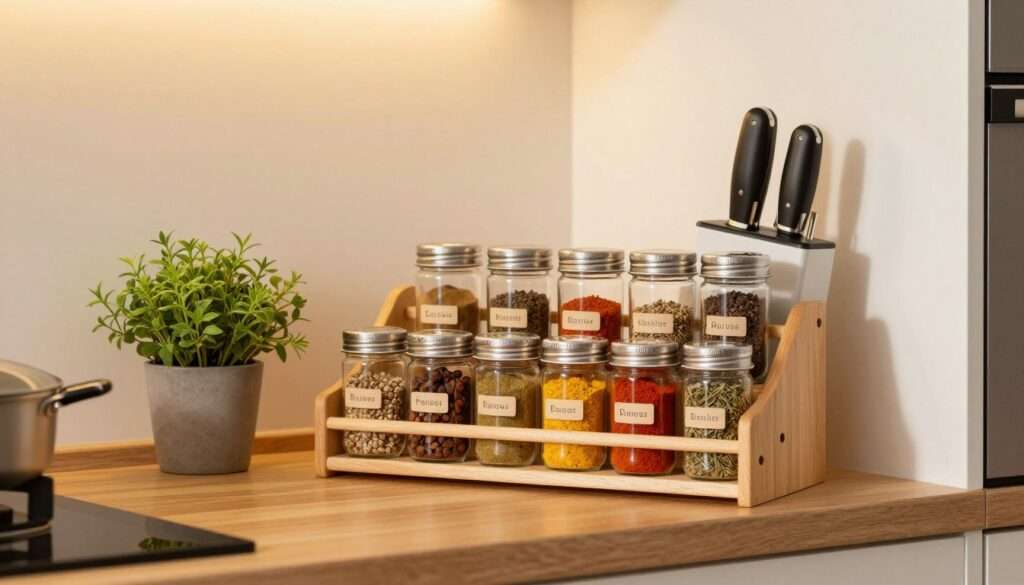

Many small kitchens have over 30 spice containers, but only a few are used often. A smart spice rack can help save space. The Lynk Professional Expandable Organizer can hold up to 64 bottles, while The Container Store 20-Bottle Acrylic Rack and Zri Bamboo shelf offer great compact designs.
This guide helps you find the best spice racks for small kitchens. You’ll learn about different types like drawer, countertop, and wall-mounted racks. We’ll also share tips on measuring, choosing materials, and keeping spices fresh.
Ground spices last 6–10 months, and whole spices up to two years. So, organizing spices is key to keeping flavors alive. Whether you need something to save vertical space or something easy to move, this list has you covered. We focus on solutions that are stable, easy to see, and work well in real life.
Key Takeaways
- Choose the right format—drawer, countertop, cabinet, or magnetic—based on your primary goal: visibility, capacity, or hidden storage.
- Space-saving spice racks and compact spice storage solutions vary by capacity and stability; solid shelves outperform slatted designs.
- Measure before you buy: drawer depth and cabinet width determine which expandable organizers will fit.
- Store spices in a cool, dark place to maximize potency; airtight containers help extend shelf life.
- Prioritize labels and placement by frequency of use to streamline meal prep in small kitchen storage solutions.
Why you need a dedicated spice rack in a small kitchen (space-saving spice racks)
A small kitchen needs smart planning. A spice rack keeps jars organized, saving counter space and reducing pantry mess. It makes meal prep quicker, cuts down on buying the same spices, and ensures flavors are at their best.
Common small-kitchen storage challenges
Small kitchens face space issues. Counters and drawers are tight, and tall cabinets waste space. Forgotten items lead to buying the same spices over and over.
How a spice rack improves accessibility and reduces duplicate purchases
A good spice rack makes labels easy to read. Side- or top-label systems and in-drawer organizers save time. Users of YouCopia SpiceStack and Lynk-style trays bought less because they knew what they had.
Benefits of visible, labeled spice storage for meal prep and flavor retention
Visible, labeled storage speeds up cooking. Pull-out and drawer racks keep spices within reach. Store jars in a cool, dark place to keep spices fresh longer.
For small kitchens, think about magnetic shelves or wall racks. They free up space on counters and in cabinets. These ideas make your spice rack a valuable asset without cluttering your kitchen.
How to choose the right style: wall-mounted, countertop, cabinet, or drawer
Choosing the right spice storage depends on your kitchen’s layout and how you cook. Measure your drawer depth, cabinet height, and wall space first. Think about whether you want spices visible for quick access or hidden for a clutter-free kitchen.
Wall-mounted spice racks: pros, cons, and when to pick one
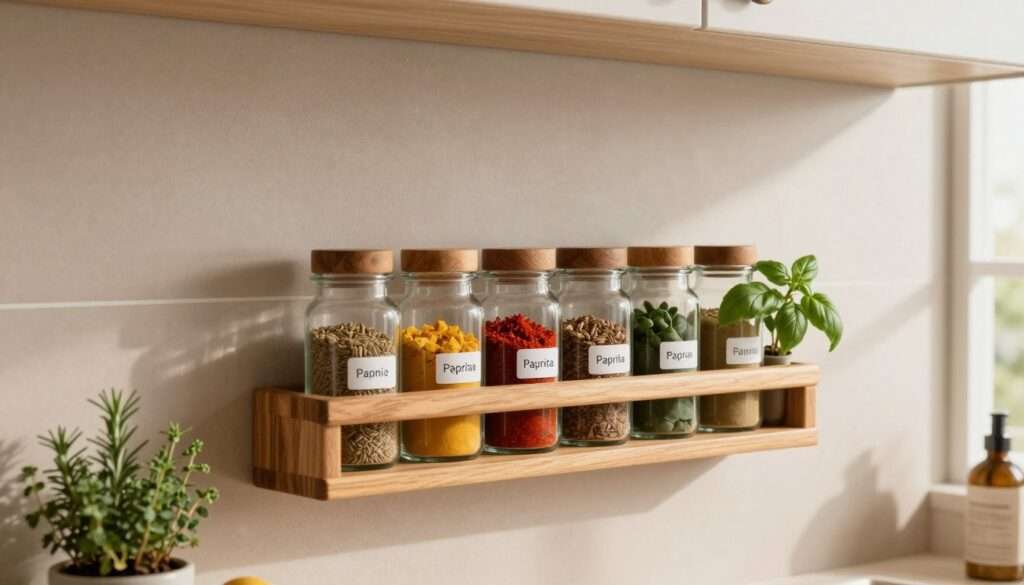
Wall-mounted spice racks are great for small kitchens. They save counter and drawer space. They’re perfect for areas with vertical wall space.
They keep spices within reach and use wall gaps well. But, they can look cluttered if jars are different sizes. Make sure your wall is magnetic for magnetic shelves like HuggieGems.
Countertop spice organizers: visibility and convenience considerations
Countertop spice organizers make spices easy to grab. The Container Store 20-Bottle Acrylic Rack is stylish and fits many kitchens. It can also be mounted on the wall if you change your mind.
But, filling bottles can take time. Countertop units take up space. Think about how much counter area you can spare.
Cabinet and in-cabinet expandable shelves for maximizing vertical space
Cabinet and in-cabinet shelves use vertical space well. They hide clutter behind doors. Solid shelves are better for jars of different sizes.
Zri Bamboo shelves fit various widths and hold many jars. They’re perfect for maximizing storage while keeping spices hidden.
Drawer spice racks for label-forward access and hidden storage
Drawer spice racks have jars on their sides for easy label reading. This makes meal prep faster and reduces duplicates.
Options like the Lynk Professional Organizer and Marie Kondo models focus on readability and neatness. Measure your drawer carefully before buying. Drawer systems need enough space, so check dimensions and jar count first.
| Style | Best for | Main benefit | Key drawback |
|---|---|---|---|
| Wall-mounted spice racks | Small kitchens with free wall space | Frees counters and drawers; easy access | Visible clutter; requires suitable mounting surface |
| Countertop spice organizers | Home cooks who use spices constantly | Highest visibility and fastest reach | Consumes counter space; may need decanting |
| Cabinet / in-cabinet shelves | Those who prefer hidden storage | Maximizes vertical inside cabinets; hides clutter | Requires cabinet depth and proper sizing |
| Drawer spice racks | Kitchens with deep, wide drawers | Label-forward access; tidy and concealed | Needs exact drawer measurements; limited capacity |
Best Drawer Spice Rack picks and why they work in tight spaces
Drawer organizers help keep kitchens tidy. For small counters, choose spice racks that use drawer depth and have clear labels. These are top picks for saving space and organizing small kitchens.
Lynk Professional Expandable Organizer
The Lynk Professional can hold a lot of jars when expanded. You can fit between 32 and 64 bottles, depending on the model and how far you expand it. Serious Eats tested the largest setup and found it could hold up to 64 standard bottles.
This organizer is made from alloy steel, which doesn’t stain or warp. It’s easy to install: just slide it into a drawer and expand it. It fits in drawers from 13.25″ to 26.5″ wide, with common sizes like 16.5 x 13.25 x 1.5 inches. It stores jars on their side, making labels easy to read.
Marie Kondo Narrow In-Drawer Spice Organizer
This organizer focuses on making labels easy to see and use. You can quickly pick out what you need, speeding up meal prep and reducing waste.
Its capacity varies by vendor and model. Some say it holds about 15 standard bottles, while others claim up to 27. It’s great for a moderate collection, not a huge pantry. The wood finish is light but can stain from turmeric or spills, so be careful.
Tips for measuring drawers and choosing the right expandable size
Measure your drawer’s width, depth, and interior space. Subtract the drawer wall thickness to compare with product specs accurately.
Check the collapsed and expanded widths. Make sure the depth supports tall bottles or wide tins. If you have jars of different sizes, choose expandable or flat shelves over cubbies. Cubbies waste space when sizes vary.
Opt for solid-base organizers to prevent bottles from falling. Solid bases are better at stopping spills and keep things stable when opening or closing the drawer.
Best countertop and modular systems for compact spice storage solutions
You need countertop spice organizers that save space and keep jars visible. They should also stay steady during daily use. Below are compact systems that work well on tight counters or inside a pantry. Each option balances footprint, capacity, and ease of access.
The Container Store 20-Bottle Acrylic Rack
The clear acrylic stand from The Container Store offers a minimalist look. It fits modern kitchens well. It holds twenty large bottles and includes glass jars with labels.
You can place it on a counter or mount it to a wall or door for extra flexibility. Cleaning is simple and the display helps you spot spices fast. Plan time to decant full-size jars into the included bottles.
Small sprinkle caps may not suit large flakes or whole herbs.
YouCopia SpiceStack
YouCopia’s modular, tiered drawers slide out for full visibility. The system fits on a countertop, in a pantry, or inside a cabinet. You can start with one unit and stack more to expand capacity as needed.
Expect to store roughly 24 standard 4″ jars or up to 48 two-inch jars depending on configuration. Drawer pull-outs cut down on duplicate purchases by making labels easy to read. Non-slip feet keep the stack steady.
The plastic build can feel less premium than wood or metal alternatives.
Copco Non-Skid Turntable
The Copco turntable delivers a stable base that beats many slatted designs for tip resistance. It can hold a large number of jars, making it a solid choice when counter space is limited.
Access to center or lower-tier bottles can be tricky. Lazy-Susan layouts hide some jars, which may slow you during cooking. Pick a size that matches your most-used spices to avoid lost items in the center.
Quick guidelines to pick the right countertop spice organizers:
- Favor solid bases and non-slip feet to prevent tip-overs.
- Match capacity to your spice collection so you don’t waste counter space.
- Prioritize visibility for daily-use jars to speed meal prep.
These compact spice storage solutions fit a range of needs and budgets. Use the right layout to support your kitchen organization ideas and keep spices fresh, visible, and within reach.
Best cabinet and pull-out racks to maximize kitchen storage
Choosing the right in-cabinet solution helps you maximize kitchen storage while keeping spices visible and within reach. Below are focused options that work in narrow cabinets and standard pantry shelves. Pick what fits your cabinet depth and your tolerance for installation work.
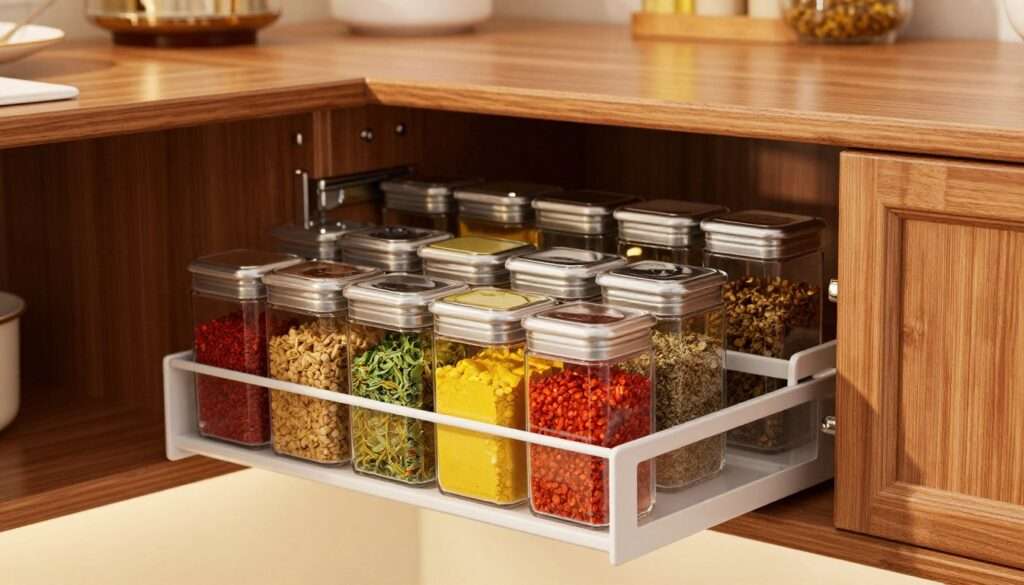
Zri Bamboo expandable shelf
The Zri Bamboo expandable shelf uses bamboo for a warm, natural look that fits inside cabinets or on pantry shelves. It expands from about 12″ to 22″, holding roughly 18–30 standard spice jars depending on how far you extend it.
Bamboo is attractive but porous. Expect possible staining from turmeric or other spills. This option works best when you want a solid, open shelf that lets you store mixed jar sizes and a few larger containers.
Lynk Double Pull-Out Spice Rack
The Lynk Double Pull-Out design gives two sliding tiers for clear forward access to jars. Stainless steel slides and wood accents create a sturdy feel. It stores 20+ jars while using a narrow horizontal footprint, making it ideal for tight spaces.
Installation requires screws and drilling into the cabinet interior. If you rent, check with your landlord before modifying cabinets. The glide mechanism is smooth in hands-on tests, which helps prevent bottles from getting lost in the back of the shelf.
Spicy Shelf Deluxe and common pitfalls
Some in-cabinet systems, such as Spicy Shelf Deluxe models, aim to offer clever features but fall short in assembly and durability. Complex assemblies and brittle plastic parts can break during install, leaving you with unstable sections.
Plastic or slatted in-cabinet designs sometimes wobble or let jars tip. Reviews and tests show simple, solid-construction pull-outs and expandable shelves outperform overly complicated units. For lasting performance, choose wide bases, strong glides, and reliable materials.
- Consider a pull-out spice rack when you need forward visibility in narrow cabinets.
- Choose expandable shelves to maximize kitchen storage without power tools.
- Prefer solid materials over fragile plastics to reduce wobble and tipping.
- For renters, look for non-drill or minimally invasive mounts when possible.
Magnetic and wall-mounted solutions to free up counter and cabinet space
Opt for a magnetic spice rack or wall-mounted spice racks for clear counters. They’re perfect for small kitchens and make prep easier. These solutions save space without losing storage capacity.
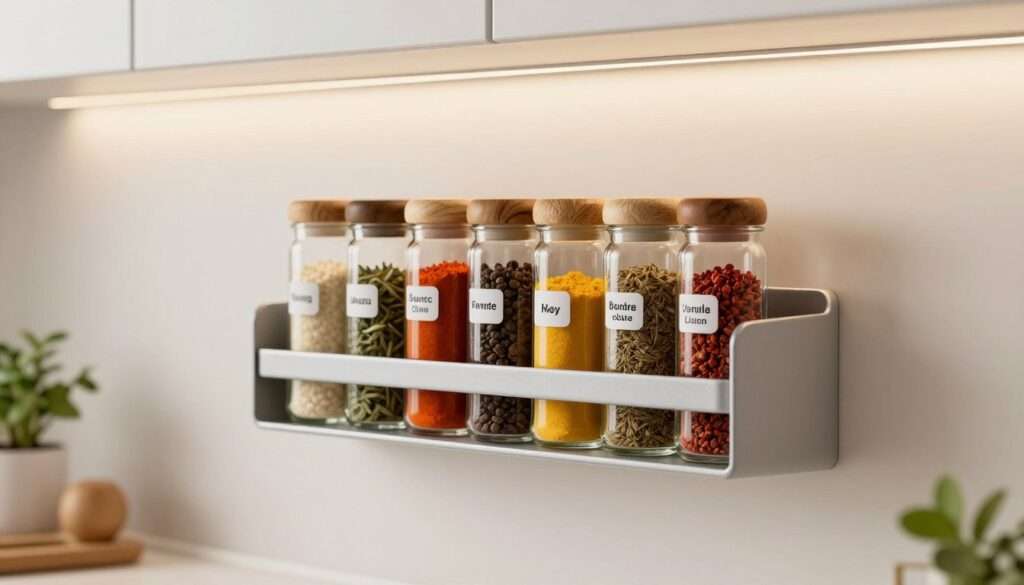
HuggieGems magnetic shelves use strong magnets and slim shelves. They can hold up to 24 spice jars on four shelves, about 11.8″ x 4.3″. The magnets are strong enough to hold jars without slipping.
These shelves are modular, allowing you to arrange them as needed. Some sets come with detachable hooks for utensils, saving drawer space.
Before mounting, check if the surface is magnetic. Not all stainless-steel is. Consider the weight and where you’ll place it. Make sure it’s away from heat and busy areas.
Think about how much you want to display. Fridge or wall storage makes spices easy to reach but may look cluttered. For a neater look, use smaller racks or uniform jars.
Wall-mounted racks are better than over-the-door or pull-down designs for stability and access. Over-the-door racks can be hard to reach and may swing spices. Pull-down systems can drop jars. Wall racks are great for stable, permanent storage.
Magnetic options are ideal for renters or those who don’t want to drill. They’re a smart, non-drill way to keep spices organized and visible.
Material and construction guide: what holds up best in a busy kitchen
Choosing the right materials is key for durability and daily use. This guide helps you pick durable spice racks that fit your kitchen habits and style.
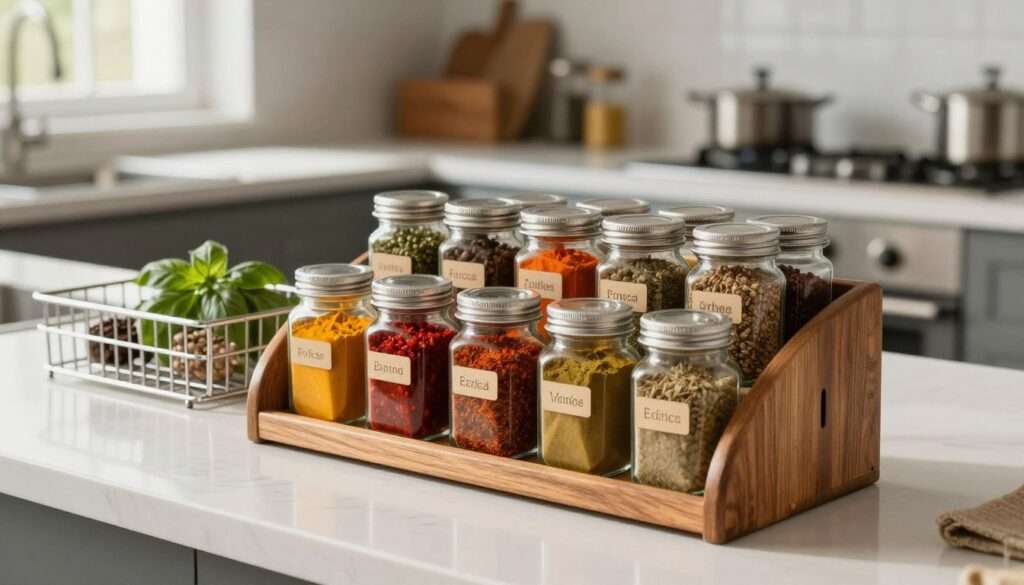
Metal and alloy steel for durability and stability
Metal, like alloy steel, is strong for the long term. Brands like Lynk use steel in pull-out systems that resist stains and warping. You get smooth gliding and jars that stay steady.
Metal is great for a busy kitchen. It keeps jars upright and holds different shapes without sagging. It’s a top choice for small kitchens needing strength.
Bamboo and wood aesthetics versus porosity and staining risks
Bamboo and wood, like Zri Bamboo, add warmth and natural beauty. They match well with wood cabinets and farmhouse styles. But, they’re porous and can stain.
Quickly wipe spills and consider an oil finish or liners to protect. Many find the look worth the extra care, making bamboo a good choice for kitchen looks.
Acrylic and plastic: visibility, cleaning, and breakage concerns
Clear acrylic racks from The Container Store make finding contents easy. Acrylic and quality plastic are easy to clean and show labels well. Glass jars with many organizers add nonporous longevity.
Lower-quality plastics may break or warp. Avoid flimsy trays that let bottles wobble. Choose solid bases and thick acrylic for less breakage.
Construction advice: what to prioritize
Choose solid, flat shelves over slatted wire designs for stability. Look for secure mounting and tested glides for pull-out units. Small construction details matter more than looks.
Use this guide to compare metal, wood, and acrylic. Think about your cleaning routine, aesthetic goals, and space. Smart choices lead to durable spice racks that last.
How to organize your spices for maximum efficiency (kitchen organization ideas)
Organizing spices well saves time and keeps flavors fresh. First, decide where your spices will go. Will it be on the counter, in a drawer, or in a cabinet? This choice helps you choose the right spice storage for your kitchen.
Labeling strategies for side labels and tops to improve readability
Use side labels for easy reading on shelves and cabinets. Top labels are best for bottles in drawers or on tiered racks. Brother label makers or The Container Store’s preprinted labels help you stay organized.
Label both the top and side of glass jars for quick scanning. This is useful whether you’re pulling a drawer or reaching for a countertop tier. Make sure the labels are big enough to read quickly while cooking.
Organizing by frequency of use, cuisine, or alphabetically
Put everyday spices like salt and pepper where you can reach them fast. Store less-used spices on higher shelves or in the back. This keeps your kitchen tidy and speeds up prep time.
Group spices by cuisine if you often cook different types. This makes it easier to find what you need. Or, you can organize them alphabetically for a more structured approach.
Best practices to keep spices fresh: light, heat, and airtight storage tips
Keep spices in airtight glass jars away from light and heat. Don’t place jars over stoves or near sunny windows. Glass is better than wood or plastic for keeping oils and flavors fresh.
Replace ground spices every six to ten months for the best flavor. Whole spices can last up to two years in cool, dark places. Use airtight seals to keep your spices fresh longer.
For small kitchens, choose spice racks that are easy to see and store spices airtight. The right spice storage can change how you cook and shop.
Common problems and smart fixes for small kitchen spice storage (innovative spice rack designs)
When jars wobble, shelves get crowded, or drilling is not an option, you need reliable solutions. These smart fixes and product choices can turn clutter into tidy, usable space without a big remodel. Choose solutions that fit how you cook and your kitchen’s limits.
Preventing bottles from tipping: Slatted shelves can let bottles shift and fall. Some over-the-door and Honey-Can-Do style racks allow tipping under everyday use. Opt for solid-base racks from brands like Lynk, Zri, or The Container Store acrylic systems to keep jars upright. Solid shelves cradle irregular shapes and stop the cascade when you reach for one bottle.
Accommodating mixed jar sizes and bulky containers: Avoid rigid, molded cubbies such as round-specific Kamenstein slots unless you standardize jars. Expandable shelves and open flat racks—examples include Zri, Lynk Double pull-out, and HuggieGems metal shelves—handle round, rectangular, and tall jars plus bulk items like extract bottles or peanut butter jars. If you decant, compare included bottle sizes and sprinkle-cap fit; some small caps from The Container Store may not suit every spice.
Renter-friendly, non-drill options and magnetic alternatives: Strong magnetic shelves like HuggieGems attach to refrigerators and metal surfaces without hardware. Countertop modular systems such as YouCopia SpiceStack and acrylic racks work as portable, space-saving spice racks for leased homes. Over-the-door racks need trial placement to avoid clearance problems with tall cabinets.
Practical smart fixes you can do today:
- Line shelves and turntables with non-slip pads to reduce sliding.
- Keep frequently used small jars in a shallow countertop tray and store bulk spices in a cabinet or pantry to maximize small kitchen storage solutions.
- Use adhesive-backed mounts rated for weight where drilling is forbidden, or opt for rare-earth magnets with proper load specs.
These practical tips pair well with innovative spice rack designs to create durable, tidy setups. Choose solutions that prioritize stability and flexibility so your system adapts as your collection grows. Smart planning turns cramped shelves into efficient, space-saving spice racks that make cooking faster and less wasteful.
Conclusion
Choosing the best spice racks for small kitchens depends on where you have space. If you have roomy drawers, consider the Lynk Professional expandable organizer or a Marie Kondo in-drawer system. These options offer tidy, label-forward access.
For countertops or pantries, think about the Container Store 20-Bottle Acrylic or YouCopia SpiceStack. These choices provide visibility and modular stacking. Cabinets are great for Zri Bamboo shelves or a Lynk double pull-out to use vertical space well. Magnetic options like HuggieGems also save counter space by using metal surfaces.
Before making a decision, measure your drawer and cabinet widths. Map out your wall area and check the sizes and volumes of your jars. Decide if you’ll use uniform bottles or keep mixed jars. Make sure shelves are solid to prevent tipping and that labels are easy to read.
Remember, store spices away from light and heat to keep them fresh. Ground spices last about six to ten months, while whole spices can last up to two years. Choose materials that are durable yet look good: alloy steel or metal, bamboo, or acrylic.
Many effective options are affordable, costing between $17–$43. They save you time and help you avoid buying duplicates. Pick compact spice storage solutions that fit your cooking habits and kitchen size. By focusing on visibility, measuring carefully, and following the checklist, you’ll make meal prep faster and more consistent.
FAQ
What size measurements should I take before buying a spice rack for a small kitchen?
Measure the space where the rack will go. This includes drawer width and depth, cabinet shelf size, and wall area. Compare these to the rack’s sizes, expanded and collapsed. Make sure the drawer is deep enough for tall bottles and matches the rack’s depth.
Which spice rack style saves the most space in a tight kitchen?
It depends on your space. Drawer systems like Lynk and Marie Kondo are great for hidden storage. Wall-mounted or magnetic shelves are good for vertical space. Expandable shelves in cabinets turn wasted space into storage.
How many spice bottles do common racks hold?
Rack capacities vary. Lynk systems can hold 32–64 bottles. The Container Store’s acrylic system holds 20 bottles. Zri Bamboo fits 18–30 jars. HuggieGems shelves hold 24 jars. Copco turntables can hold up to 40 jars.
Are drawer organizers better than countertop racks for meal prep speed?
Drawer organizers like Lynk and Marie Kondo offer quick access. Countertop racks like The Container Store and YouCopia SpiceStack provide immediate reach. Choose drawers for hidden access; choose countertops for constant access.
Do I need to decant spices into new bottles for certain racks?
Some racks, like The Container Store’s 20-Bottle Acrylic Rack, require decanting. Decanting makes spices look neat but is time-consuming. Many shelves and drawer organizers accept mixed jar sizes without decanting.
Which materials hold up best in a busy kitchen?
Alloy steel and metal racks like Lynk are durable and stable. Acrylic racks are clear and easy to clean but can crack. Bamboo and wood racks are attractive but can stain. Avoid flimsy plastic and slatted designs.
How do magnetic spice shelves perform and are they renter-friendly?
Magnetic shelves like HuggieGems are strong and flexible. They’re great for renters because they don’t need drilling. They can hold up to 24 jars. Check if your surface is magnetic and consider clutter and heat.
What are the downsides of lazy-Susan or turntable spice organizers?
Turntables like Copco Non-Skid can hold a lot but hide central jars. They’re good for corners but slow down spice retrieval. Use solid bases and non-slip liners to prevent tipping.
How long do spices stay fresh and how should I store them?
Ground spices last 6–10 months; whole spices up to two years. Store them in airtight containers away from light and heat. Glass jars with tight seals are best. Choose cool, dark spots for storage.
Which rack types reduce duplicate spice purchases most effectively?
Racks that make labels visible, like drawer and countertop systems, reduce duplicates. They help you quickly see what you have. This leads to fewer duplicate purchases.
Are pull-out in-cabinet spice racks worth installing in small kitchens?
Yes, if you can drill and want a compact, visible solution. The Lynk Double Pull-Out is great for narrow cabinets. It requires screws and cabinet modification, so check renter rules.
How do I prevent bottles from tipping on spice racks?
Choose solid, flat shelves and wide bases. Use expandable shelves and non-slip liners to prevent tipping. Test the rack’s stability after loading.
What’s the best approach when I have mixed jar sizes?
Avoid rigid cubbies for mixed jar sizes. Choose expandable shelves, open racks, or adjustable systems. These fit tall and odd-shaped jars. Decanting requires matching bottle sizes and sprinkle cap compatibility.
Which spice racks are best for renters who can’t drill into cabinets?
Renter-friendly options include magnetic shelves, countertop racks, and drawer organizers. Adhesive-backed wall mounts are also an option. Test them first for safety and ease of removal.
How should I label spices for the most efficient system?
Use side labels for drawer or shelf systems for quick access. Top labels are best for countertop jars. Label both top and side if decanting. Use a label maker for consistency. Grouping spices by frequency or cuisine speeds up meal prep.
What common pitfalls should I avoid when choosing a spice rack?
Avoid brittle plastic, slatted designs, and complicated assemblies. Measure the space before buying. Consider decanting and mounting options for your kitchen and rental status.